Harvesting Rainwater During Festivals: A Site Guide
Festival washwater and rooftop rainwater need separate routes. Yet a decorated courtyard, temporary kitchen or event stage can put both flows beside the same drain. For a residents’ welfare association (RWA), office campus or commercial venue, festive preparation should include the water route beneath the celebration. This guide explains how to keep harvesting rainwater safely while managing decorations, cleaning, temporary structures and contractor handovers.
TL;DR: Keep festive activities clear of rainwater collection routes. Separate kitchen, cleaning and immersion water from harvesting inlets. Protect access to filters and recharge pits, check temporary structures against drainage paths, and assign someone to inspect the site before reopening collection after an event. Follow local rainfall conditions rather than festival dates.
Step 1: What should your festive water plan cover?
Your festive water plan should show where rain falls, where event activities happen and where each water stream goes. Mark collection inlets, filters, storage tanks, recharge structures and wastewater connections. Give the event organiser and facility supervisor the same drawing so temporary changes preserve those routes.
Start with the actual event footprint. A celebration that normally occupies a meeting room may move into a courtyard. Food stalls may appear beside a roof downpipe. A delivery vehicle may need access across an inspection cover.
Walk the site with the people making these arrangements. Include the housekeeping supervisor, event contractor, security representative and person responsible for the rainwater harvesting (RWH) system. Each sees a different part of the operation.
Your working materials can stay simple:
- A current site plan or a clearly marked sketch.
- The existing drainage and harvesting layout, where available.
- The proposed positions of stages, stalls, seating and temporary toilets.
- Access details for inspection chambers and equipment.
- Contact details for the facility supervisor and maintenance contractor.
Mark any uncertain connection for investigation. A drain beside a rainwater pipe isn’t proof that both reach the same destination. Ask the maintenance team to establish the route before an event contractor uses it.
EcoLive’s 4R framework for water balance provides the wider planning context: Reduce, Reuse, Recycle, Recharge. For a festive event, that means controlling demand, arranging suitable reuse and treatment, and protecting the rainwater route together.
Set responsibilities before installation begins. Who can approve a stall relocation? Who checks the inlet after cleaning? A named person makes the plan usable when the courtyard gets busy.
Step 2: Should harvesting rainwater follow the festival calendar?
Harvesting rainwater should follow local rainfall conditions and the condition of your collection surfaces, rather than a festival date. Keep the system ready wherever rain is expected, but check what has accumulated on the catchment before allowing runoff into storage or recharge.
India’s rainfall isn’t evenly distributed through the year. The FAO source states, “Less than 5 percent of the annual rainfall occurs during the dry season from December to February.” That seasonal figure doesn’t tell a facility manager whether a particular event will receive rain.
Use the local forecast to arrange staffing and inspections. Your existing system design should guide operation. When assessing capacity or proposing changes, ask the engineer about peak rainfall intensity, catchment conditions and safe overflow arrangements.
Annual rainfall totals alone don’t describe how quickly water can reach an inlet during a storm. Temporary flooring, canopies and event barriers also deserve attention because they may redirect that flow.
The festive question is therefore operational: can the existing collection route work safely with the event in place? This adds a different task to the seasonal planning covered in EcoLive’s guide to water harvesting during winter.
Avoid announcing expected litres harvested before rain arrives. Record actual observations and metre readings where available. A prepared system creates an opportunity to collect rain; the calendar doesn’t supply the water.
Step 3: How do you keep event water out of rainwater inlets?
Keep kitchen water, floor washwater and water containing colours, oils or cleaning products out of rainwater collection inlets. Give each activity a suitable collection or wastewater route approved by the facility team. If the destination is uncertain, pause discharge until the route is confirmed.
Place food preparation and utensil washing where the venue can manage their wastewater. Ask caterers where they intend to empty containers before they arrive. A convenient open drain may lead somewhere entirely different from the connection they need.
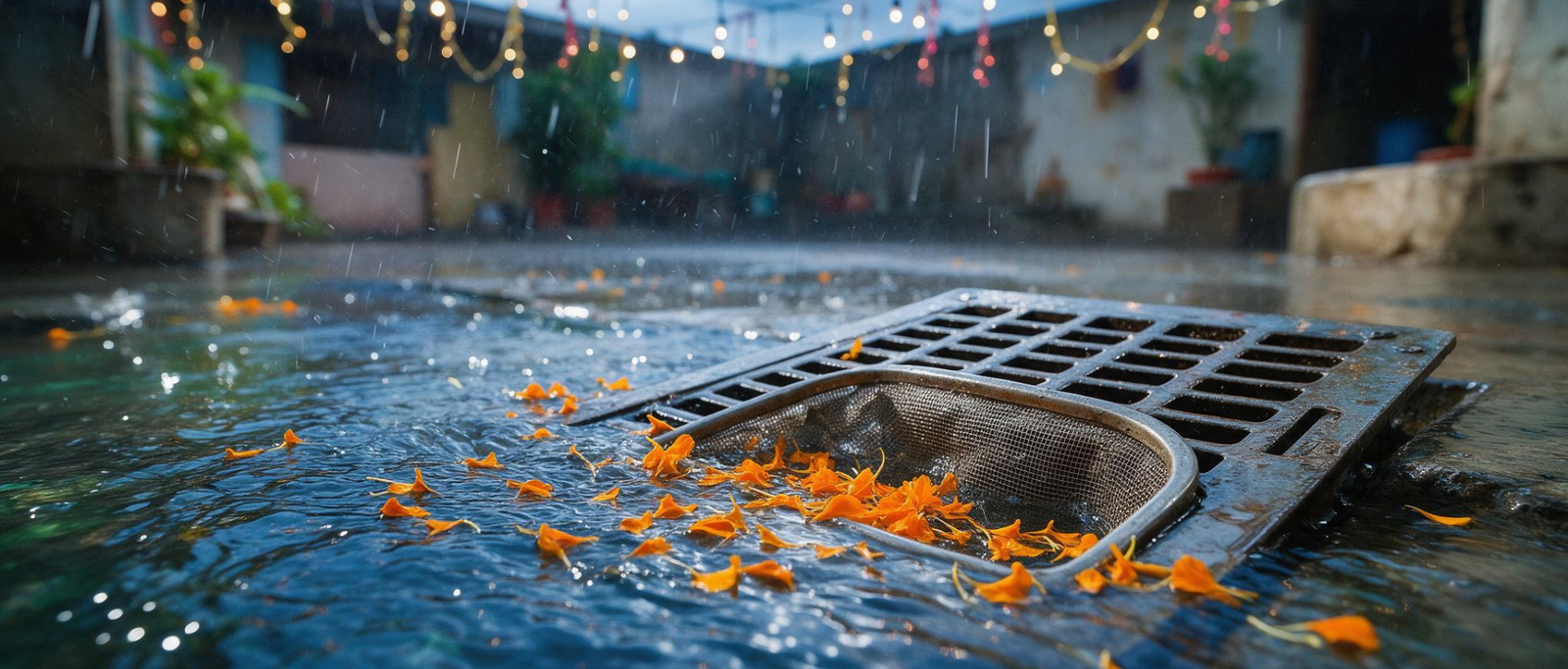
Decoration work needs the same attention. Packaging, flowers, fabric offcuts and loose materials should have collection points away from inlets. Ask installers to remove their waste as they work.
Can your housekeeping team identify the harvesting inlet without opening a drawing? Use clear temporary signs where event staff might mistake it for a disposal point. Explain the reason during the briefing: this opening feeds a water collection system.
What about immersion or ceremonial water?
Keep immersion and ceremonial water separate from rainwater harvesting infrastructure. Arrange handling according to its contents and applicable local requirements. The presence of water doesn’t establish that a mixture is suitable for groundwater recharge.
Never use a recharge pit as a convenient receiving chamber for leftovers from an event. Ask the responsible contractor or facility engineer to identify the correct handling route in advance.
Cleaning methods also matter. Collect loose solids before washing surfaces. Where cleaning products are required, control the washwater route rather than letting it run towards harvesting inlets.
If an accidental discharge reaches a collection area, record what entered and where it travelled. Have a competent person decide what inspection, cleaning or testing is necessary before collection resumes.
Step 4: Where should stages, stalls and decorations go?
Place temporary structures where they preserve drainage routes, equipment access and safe movement around harvesting infrastructure. Keep inspection covers visible and reachable. Ask the facility engineer to review any proposed load, fixing or vehicle movement near buried tanks, chambers and recharge structures.
Event layouts often focus on the space people can see. The maintenance team needs to review what sits below it. A stage can conceal a chamber, while stacked supplies can prevent access to a filter.
Give contractors a marked plan showing areas that need protection. Explain whether a restriction concerns access, drainage or structural loading. They can make better placement decisions when the reason is clear.
Do not drill, anchor or place heavy equipment near buried infrastructure without approval from the person responsible for it. Cover strength and ground conditions need site-specific assessment.
Temporary canopies need a water route too. Where will their runoff land? Check that concentrated discharge won’t be directed towards electrical equipment, entrances or an area without suitable drainage.
Keep emergency and maintenance access practical throughout the event. A cover that can technically be reached after dismantling a stall isn’t readily accessible.
Walk the finished layout before opening the venue. Compare it with the plan, including last-minute changes. This check is especially useful when separate contractors installed the stage, catering area and decorations.
Step 5: What should the team check before rain arrives?
Before rain arrives, check the collection surface, gutters, inlets, filters, bypass arrangements and overflow routes. Confirm that temporary event materials haven’t changed their condition or access. Follow the installed system’s operating instructions and refer uncertain settings or defects to the maintenance contractor.
Begin upstream. Look for loose decorations, packaging and debris on roofs or other approved catchments. Use trained staff and proper access arrangements for work at height.
Next, examine the route towards the filter. A clear inlet is useful only when the connecting path also works. Keep cleaning waste out of that path while preparing the venue.
Check the first-flush arrangement, where fitted. This diverts initial runoff according to the system’s design. It doesn’t replace an assessment of a catchment affected by event activities.
Inspect accessible filters and chambers without entering confined spaces. If the team finds damage, unusual material or an unexplained water level, arrange an assessment before relying on the system.
Then check the overflow destination. Rainwater needs a safe route when the collection or storage arrangement reaches its operating limit. Event barriers and stored materials should preserve that route.
Use EcoLive’s rainwater harvesting maintenance guide for the broader service programme. The festive inspection addresses temporary changes between those planned maintenance visits.
Write down defects, the person assigned to handle them and the operating decision. “Checked” is too vague when the next shift needs to know whether collection can proceed.
Step 6: When can collection restart after the celebration?
Collection can restart when the affected catchment and water route have been inspected, cleaned as needed and cleared for operation. If chemicals, ceremonial materials or unknown liquids entered the system, obtain a competent assessment before reconnecting it. Follow the system’s approved isolation and restart procedure.
Begin by removing event materials. Ask contractors to collect cable ties, fabric, packaging and other loose items before housekeeping starts washing the area.
Inspect the catchment with the event layout removed. Look behind former stalls and beneath temporary flooring. Areas hidden during the celebration may need attention before the next rainfall.
Cleaning should preserve separation between washwater and rainwater infrastructure. Agree the discharge route first. Simply washing a courtyard can move material into the very inlet the team wants to protect.
Check any parts that contractors moved or disconnected. Confirm that covers sit correctly, access is clear and temporary signs or barriers haven’t been left across drainage paths.
What should the handover record contain?
The handover should state what changed, what the team inspected and whether collection is ready to operate. Include unresolved issues and any restrictions. The incoming supervisor should be able to make an operating decision from the record.
Photographs can help show the condition of inlets and access points. Pair them with short notes identifying the location and action taken.
Don’t treat clear-looking water as proof of suitability. Where the event introduced a possible contamination concern, ask the responsible professional what checks are required for the intended storage or recharge route.
How should an RWA or facility team divide responsibility?
Give the facility supervisor authority over water routes and operating decisions, while assigning event-specific tasks to organisers and contractors. Housekeeping should handle waste and cleaning under an agreed plan. The maintenance contractor should assess defects or uncertain system conditions within their scope.
For an RWA, the managing committee can approve the event layout and appoint a contact for contractor questions. Volunteers shouldn’t need to improvise technical decisions during a celebration.
An office campus may already have permit and contractor briefing processes. Add harvesting infrastructure to those existing checks. The event organiser needs to know which layout changes require another review.
Keep the briefing concrete:
- Caterers use the agreed wastewater collection point.
- Decorators remove loose installation waste.
- Housekeeping confirms the washwater route before cleaning.
- Security keeps marked equipment access clear.
- The facility supervisor records isolation and restart decisions.
- The maintenance contractor examines defects requiring technical judgement.
Ask each contractor to repeat the instruction that affects their work. That reveals misunderstandings before installation starts.
Budget for the work identified by inspection. Without a site assessment, a fixed festive maintenance price would hide differences in access, condition and cleaning needs. Separate event housekeeping from repairs so the committee can see what each activity covers.
What records make festive water management useful afterwards?
Keep records of rainfall observations, system condition, operating changes and measured water movement where instrumentation exists. These records help the team understand what happened during the event. Distinguish measured collection from estimated potential, and avoid assigning a harvest volume without a defensible basis.
Record why collection was isolated and who authorised its return to service. This makes the next event easier to plan and helps explain gaps in the operating record.
Where metres are installed, capture readings with their locations and units. A tank reading and a recharge estimate describe different things. Keep their methods separate.
Log event water use by source where practical. Water supplied to catering, washrooms and cleaning belongs in the event’s water account. It shouldn’t be described as rainwater use unless the source and quantity support that claim.
EcoLive’s practical guide to water budgeting provides a useful connection to ongoing site management. Festive operations should feed that record rather than create a separate set of unsupported claims.
After the event, note which layout decisions worked. Did a stall obstruct access? Did a contractor need a clearer disposal point? Turn those observations into instructions for the next venue booking.
Frequently asked questions
Festive water harvesting decisions depend on rainfall, catchment condition and the installed system. These answers address common operating questions for RWAs, campuses and commercial venues. Ask the person responsible for your system to resolve any uncertainty about connections, contamination or safe access.
Can we keep harvesting rainwater during a festival?
Yes, if the collection surface remains suitable and the harvesting route stays protected. Keep event wastewater separate and follow the installed system’s operating procedure, including any necessary inspection or isolation.
Can courtyard cleaning water enter a recharge pit?
Don’t direct courtyard cleaning water into a recharge pit without an approved assessment and treatment arrangement. Confirm its contents and the correct wastewater route before cleaning begins.
Does every festive event need a new harvesting system?
No, the event itself doesn’t establish a need for a new system. Inspect the existing arrangement and review how the temporary layout affects drainage, access and water quality.
Is “rainwater water harvesting” a different process?
No, “rainwater water harvesting” is a repeated wording of rainwater harvesting. For a site plan or contractor briefing, use rainwater harvesting consistently and identify the actual collection, storage or recharge arrangement.
Who should approve reopening a harvesting inlet?
The person responsible for operating the system should approve reopening after the required checks. Where an event introduced possible contamination or damage, that decision should follow advice from a competent professional.
Request a Water Assessment
Ask EcoLive to assess your festive layout, rainwater routes and maintenance needs.
+91 9871472211 | ecolive.in
connect@ecolive.in