How to Build a Rainwater Harvesting System That Actually Survives the Monsoon
Currently, 33 states and union territories across India mandate rainwater harvesting. Yet, urban borewells continue to run dry. When a building treats water conservation as a government checkbox, it gets a system designed for an inspector rather than the monsoon.
TL;DR: Compliance-driven rainwater systems typically fail within two to three years because they are under-sized and ignored. By treating rainwater harvesting as a permanent infrastructure choice, sizing it to peak hourly rainfall, and maintaining it annually, buildings can eliminate tanker dependence.
Why do compliance-driven rainwater systems fail?
Compliance-driven rainwater systems fail because they are built to pass a one-time inspection, not to catch water. According to EcoLive’s field assessments, systems installed purely for compliance break down in just two to three years.
Building owners often hire the cheapest vendor to satisfy municipal bye-laws. These vendors install undersized pits and basic filters that clog during the first heavy storm. Once the inspector signs off, the system is forgotten. India receives 75% of its annual rainfall in just four months, according to the India Meteorological Department. When that volume hits a neglected, undersized pit, the water simply overflows into the municipal drain.
How did our ancestors harvest rain without mandates?
Our ancestors harvested rain without mandates by treating water security as a community necessity. For over 4,000 years, communities across India built stepwells, temple tanks, and johads without engineering degrees or government notices.
Structures like Chand Baori in Rajasthan or the 11th-century Rani ki Vav in Gujarat were not built to satisfy a local authority. They were built by choice. Rainwater harvesting is not a highly technical subject. It requires understanding your local rainfall, capturing the runoff, and storing it cleanly. When you build a system by choice—just as you would install a main gate or a backup inverter—you ensure it works.
How do you size a rainwater harvesting system correctly?
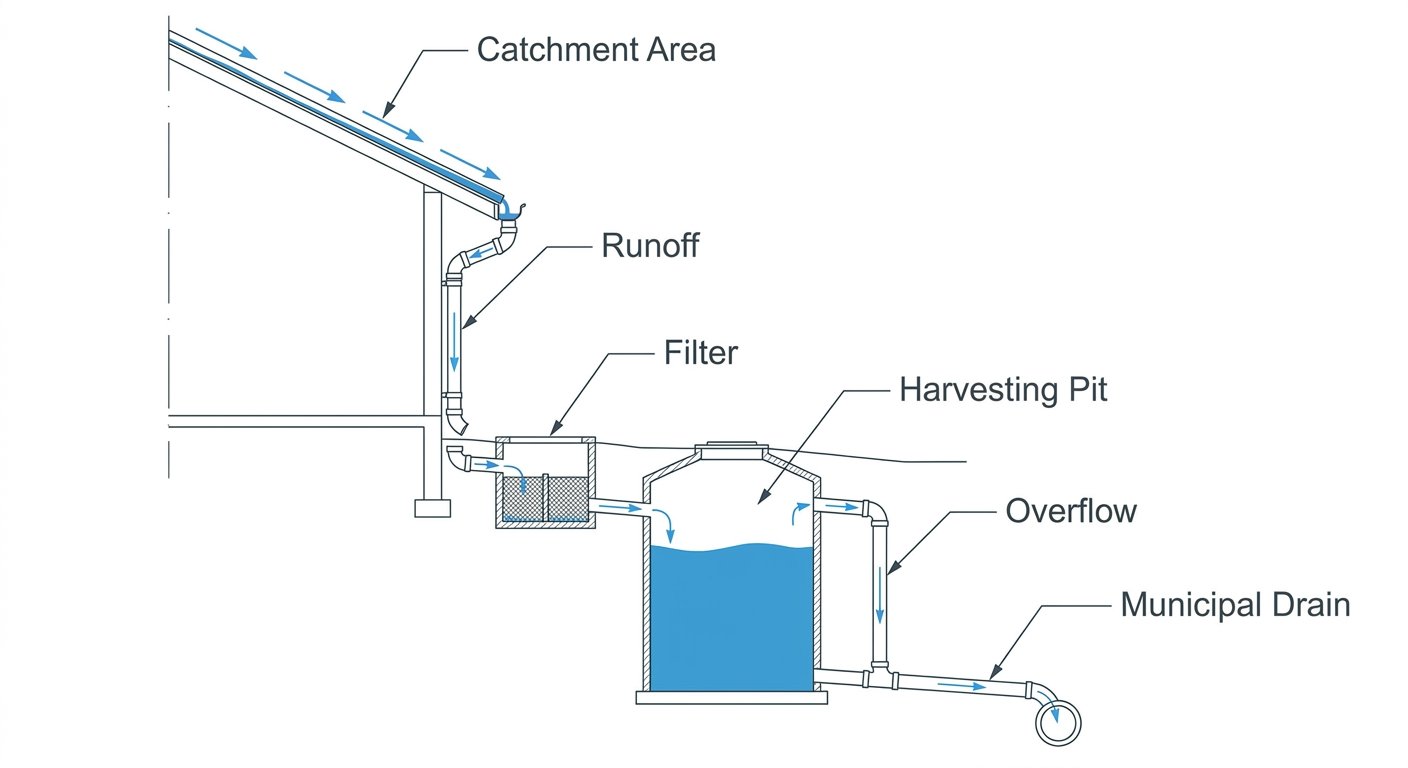
You size a rainwater harvesting system correctly by calculating the exact runoff volume of your catchment area during peak hourly or daily rainfall, rather than annual averages. While annual rainfall tells you the total yield, your infrastructure must be designed to handle the intensity of a sudden monsoon downpour.
Do not guess the capacity based on yearly figures. If your storage or recharge pit cannot handle peak hourly flow, the excess water floods your compound. First, map your clean catchment areas, which usually means the rooftop. Next, route this water through a dedicated pipe network sized for peak volume. Keep rooftop water separate from surface runoff, which carries oil and heavy silt. Finally, pass the water through a dual-stage filtration system before it enters your recharge well. You can use the EcoLive Runoff Calculator to find your exact potential.
What are the non-negotiables of groundwater recharge?
The non-negotiables of groundwater recharge are strict filtration, correct pit depth, and regular desilting. You must never allow contaminated surface water to enter a borewell directly, as this pollutes the underlying aquifer.
When designing for groundwater recharge, the pit must reach the permeable soil layer. The filter media—typically layers of gravel, sand, and pebbles—must be cleaned annually. If you ignore the filter, silt seals the bottom of the pit. The water will stand still, breed mosquitoes, and eventually back up into your premises.
How do you prepare your system for the monsoon?
You prepare your system for the monsoon by conducting a full physical inspection and cleaning in May or early June. A system that sits idle for eight months will not function perfectly on the first day of heavy rain.
Start by sweeping the rooftop to remove leaves and bird droppings. Flush the first-flush diverter to ensure the initial dirty rain does not enter your filter. Open the filter chamber and wash the media. If the sand is heavily compacted, replace it. Check all PVC pipes for cracks caused by summer heat. If your RWA or facility lacks the staff to do this, secure an annual maintenance contract with a dedicated water audit service.
FAQ
How long does a compliance-only RWH system last? A compliance-only RWH system typically fails within two to three years. Because these systems are built cheaply to pass inspection, their filters clog and their recharge pits silt up quickly without maintenance.
Do I need a technical degree to understand rainwater harvesting? No, rainwater harvesting is simpler than most people think. The core principles are sizing the system to your roof’s runoff, filtering the water to prevent contamination, and maintaining the setup annually.
Why is my rainwater recharge pit overflowing? Your recharge pit is likely overflowing because the filter media is clogged with silt, or the pit was sized for annual averages rather than peak hourly rainfall volume. Annual pre-monsoon cleaning and proper peak-flow design usually resolve the issue.
Ready to build a system by choice, not just for compliance? Contact EcoLive to request a Water Assessment. +91 9871472211 | ecolive.in