How to Conduct a 4R Water Balance Assessment and Cut Freshwater Demand by 40%
Every day, urban India generates 72,368 million litres of sewage. Only 28% of that volume receives treatment. The rest reaches our rivers untouched. Meanwhile, commercial buildings pull millions of litres from drying borewells while sending their wastewater and monsoon runoff straight to the municipal drain. A water balance assessment fixes this broken math. It turns water from a monthly expense into a managed asset.
TL;DR: A water balance assessment measures exactly how much water enters and leaves your facility. Applying the 4R framework (Reduce, Reuse, Recycle, Recharge) to this baseline typically cuts freshwater demand by 40% and delivers a measurable return on investment within 24 months.
What is a water balance assessment?
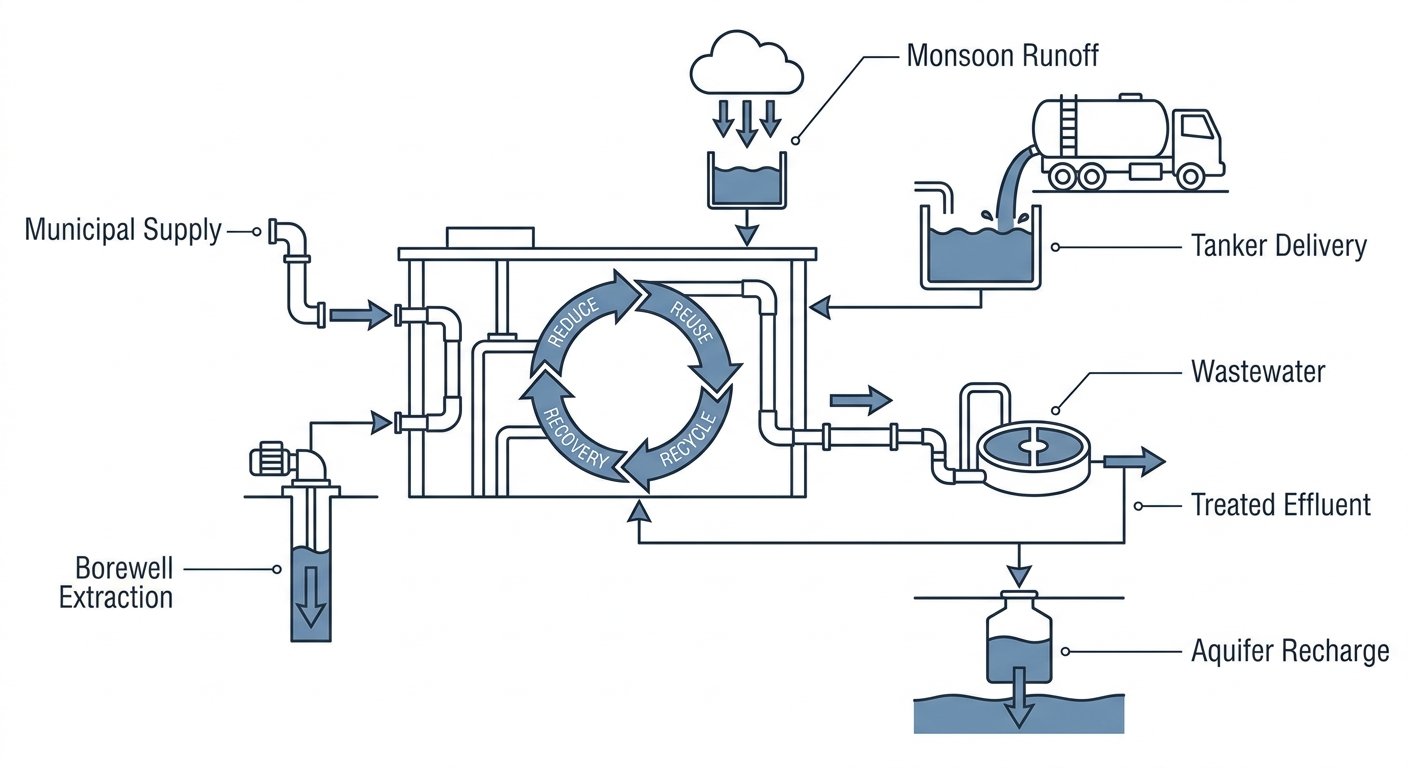
A water balance assessment is the most basic approach to determining water loss and efficiency in a building. It acts as a diagnostic tool to assess the current status of water entering a site versus water leaving it. By mapping all possible urban water flows, facility managers can identify exactly where expensive freshwater is wasted and where alternative sources can replace it.
How does the 4R framework improve a water balance assessment?
The 4R framework improves a water balance assessment by treating wastewater and rainwater as operational assets rather than liabilities. It requires the calculation and analysis of inputs and outputs to systematically reduce demand, reuse treated effluent, recycle process water, and recharge aquifers. This methodology closes the loop on the mass balance of water at your site.
How do you audit baseline consumption for a water balance assessment?
You audit baseline consumption for a water balance assessment by mapping every water inlet and outlet across your property. This includes municipal supply, borewell extraction, and tanker deliveries. Document where this water goes. Track cooling towers, domestic usage, irrigation, and industrial processes.
Most facilities find a 15% to 20% discrepancy between water bought and water used. That gap usually consists of underground leaks and unmetered waste. Fixing these baseline leaks is the cheapest water you will ever buy.
How do you implement targeted reductions and reuse?
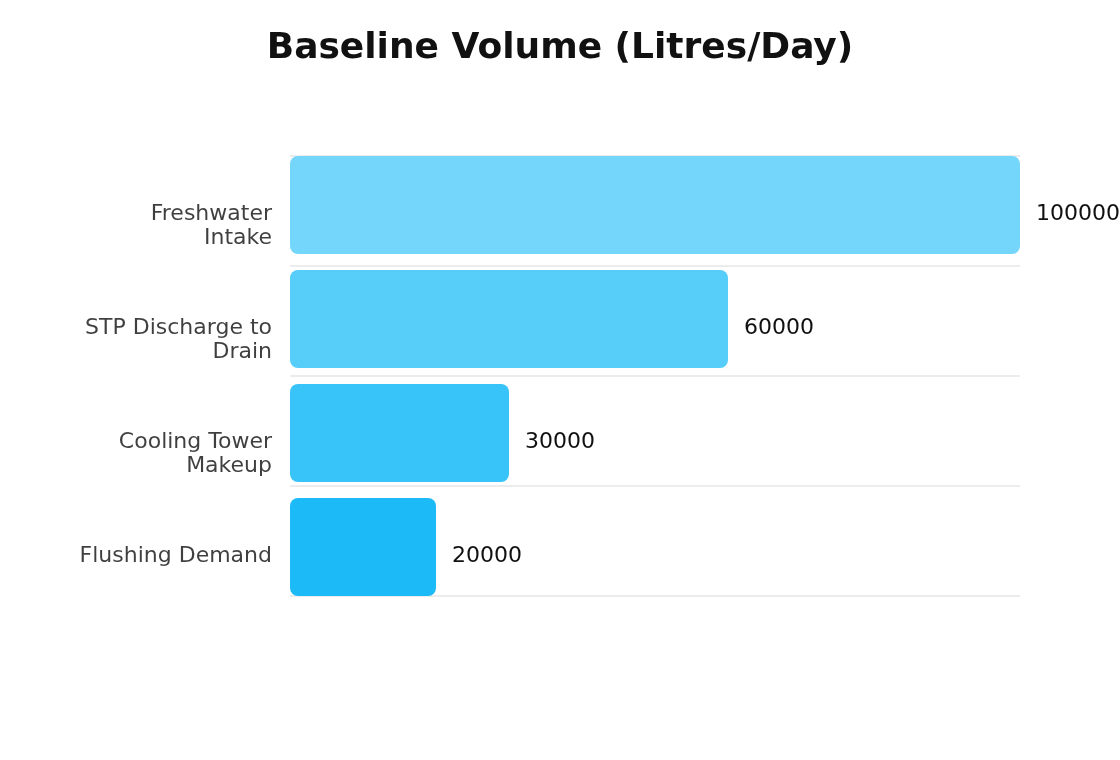
You implement targeted reductions and reuse by installing flow restrictors at the tap and routing treated wastewater to secondary applications. Once you have your verified baseline, you apply the 4R interventions. Route your RO reject water to flush toilets instead of the drain. Implement STP treated water reuse for cooling towers and landscaping. These deliberate routing choices often reduce tanker water dependency by half within the first quarter of operation.
How do you capture and recharge the monsoon?
You capture and recharge the monsoon by sizing your storage tanks for peak hourly rainfall and routing overflow into scientifically designed recharge pits. Rainwater is the final piece of the balance. Calculate your roof and surface catchment area. Filter this water and route it to your raw water tanks for immediate use to replenish the aquifer your borewells rely on.
Why do compliance-driven water systems fail?
Compliance-driven systems fail because owners treat water management as a penalty rather than an operational saving. As we have documented, compliance-driven systems fail within two to three years because developers install the cheapest possible equipment simply to pass a municipal inspection. A proper water balance assessment builds a system designed for a financial return, ensuring it gets maintained because it actively saves money.
Stop paying for water twice. Stop buying tankers while draining your STP treated water into the sewer. Measure your inputs, apply the 4R framework, and take control of your facility’s water security.
Contact EcoLive at +91 9871472211 or visit ecolive.in to request your site’s Water Balance Assessment today.
FAQ
What is a water balance assessment? A water balance assessment is a diagnostic tool that measures exactly how much water enters a facility versus how much leaves it. It identifies leaks, waste, and opportunities to replace expensive freshwater with treated wastewater or harvested rainwater.
What is the 4R framework in water management? The 4R framework stands for Reduce, Reuse, Recycle, and Recharge. It is an engineering methodology used to lower freshwater demand by optimizing consumption, routing treated effluent for secondary uses, and capturing rainwater to replenish groundwater.
How much water can a commercial building save with the 4R framework? By applying the 4R framework after a comprehensive water balance assessment, commercial buildings and factories typically reduce their freshwater demand and tanker dependency by 30% to 40%.