Why Rainwater Harvesting Systems Fail Within Three Years — And the Maintenance Schedule That Prevents It
A rainwater harvesting system is one of the few building investments that gets quietly worse every year unless somebody touches it. Nobody notices the day it stops working. There is no alarm, no leak, no complaint from a resident. The recharge pit simply takes longer to drain, then longer still, and one monsoon it does not drain at all — water sheets across the podium and the association calls a contractor who says the system needs to be rebuilt.
It usually does not need to be rebuilt. It needs the maintenance nobody scheduled.
What actually fails
Systems rarely fail at the parts people worry about. The tank does not crack. The pipes do not collapse. Three things degrade instead, and all three are cheap to prevent and expensive to ignore.
The filter media clogs. Every filter — whether a simple gravel-and-sand bed or a manufactured unit — accumulates the fine silt that roofs shed. That silt is invisible in the first year. By the third it has formed a compacted layer that water cannot pass through at the rate the system was designed for. The system has not broken; its throughput has quietly halved.
The first-flush diverter stops diverting. The first few minutes of runoff carry the dust, bird droppings and leaf matter that have collected on the roof since the last rain. A first-flush device sends that water to waste. When its outlet blocks or its ball valve seizes, that contaminated first flush goes straight into the tank or the recharge pit instead — and it carries with it precisely the material that clogs everything downstream. One failed component accelerates the failure of every other.
The recharge pit silts up from below. This is the one that surprises people. A recharge pit does not just receive water from above; it sits in soil, and fine particles migrate into the pit’s void spaces over time. Percolation rate drops even if everything upstream is spotless.
None of these are dramatic. That is exactly why they are missed.
The maintenance schedule
The useful frame is not “annual servicing.” It is a rhythm tied to the monsoon, because the monsoon is what stresses the system and the dry months are when you can work on it.
Six to eight weeks before the monsoon
This is the important one. If you do nothing else, do this.
- Clean the roof catchment and gutters. Everything on the roof in May is in your tank in June.
- Open and clear the first-flush diverter. Check that the drain outlet runs free and that any ball or float moves without sticking. Replace a seized valve now, not in July.
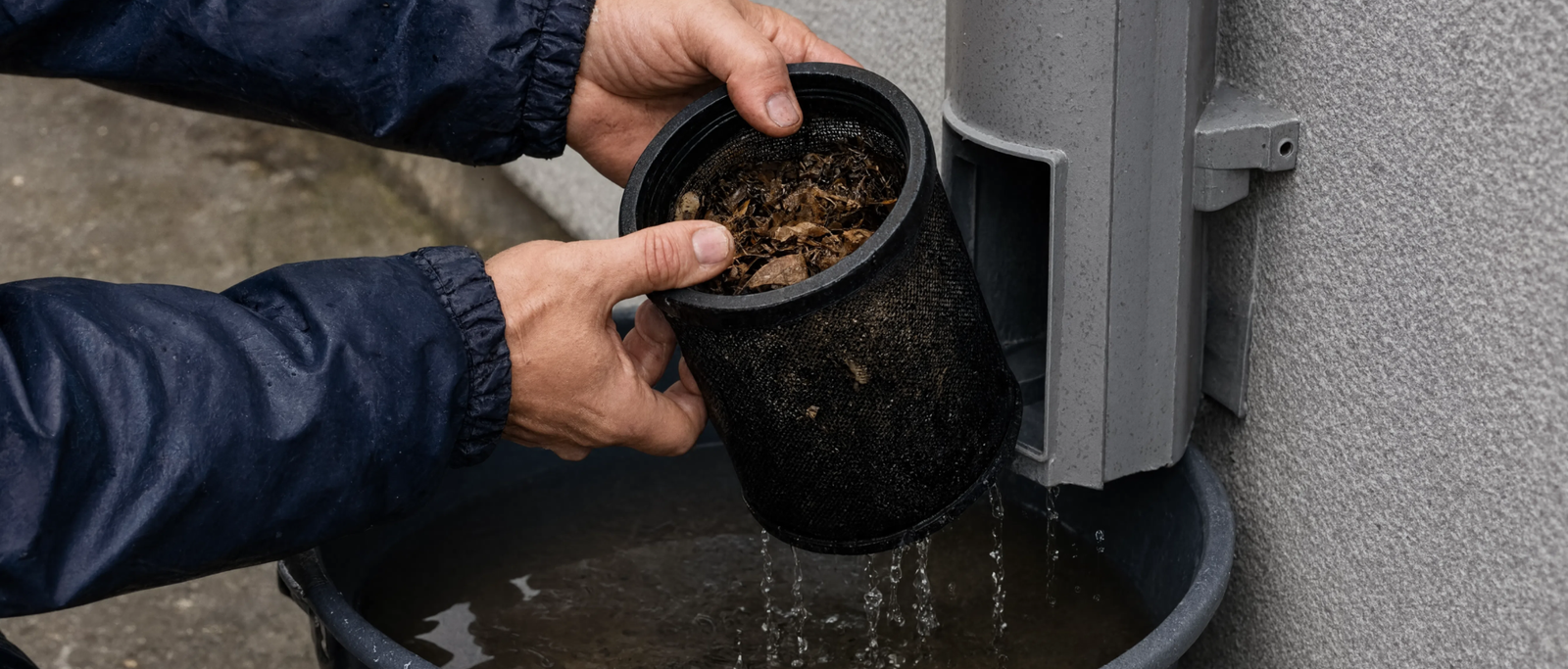
- Backwash or replace filter media. Sand and gravel beds should be removed, washed, and reinstated — or replaced if the material has broken down. Manufactured filters have a cartridge or mesh with a manufacturer’s interval; follow it.
- Inspect the recharge pit. Look at the top layer of aggregate. If it is capped with a visible layer of fine silt, that layer needs to come out.
- Run a percolation check. Fill the pit with a known volume of water and time how long it takes to drain. Write the number down. This single figure, tracked year on year, tells you more about system health than any inspection.
During the monsoon
- Watch the system in the first heavy rain. Not the first drizzle — the first real downpour. Is water reaching the pit? Is anything overflowing that should not be? Fifteen minutes of standing in the rain once a season catches problems that no dry-weather inspection will.
- Check for standing water around the recharge area within a day of heavy rain. Water still pooling 24 hours later means percolation has failed.
After the monsoon
- Clear the filters again. They have just processed a season’s worth of sediment.
- Record the year’s numbers: percolation time, any overflow events, any interventions. This record is what turns a guess into a decision three years from now.
Every three to five years
- Desilt the recharge pit properly — aggregate out, pit cleaned, aggregate washed or replaced. This is the intervention that resets the system, and it is the one most often deferred until the pit has stopped working entirely.
Why the percolation number matters more than the inspection
Most maintenance contracts produce a report that says the system was inspected and found satisfactory. That sentence carries almost no information.
A percolation time does. If your pit drained 1,000 litres in 40 minutes in year one and takes 90 minutes in year three, the system is telling you something specific and quantitative, and you can act before the monsoon rather than during it. If it takes 40 minutes both years, you have evidence that your maintenance is working and you can stop worrying about it.
Ask for the number. Any competent maintenance provider can produce it, and one that cannot is not measuring anything.
What this costs versus what failure costs
Preventive maintenance on a typical apartment system is a modest annual line item — filter media, a few hours of labour, occasional valve replacement. Rebuilding a failed recharge structure means excavation, disposal of contaminated aggregate, new material and the disruption of doing all of that in a working building. The gap between the two is large, and it widens the longer the system is neglected.
There is also the cost people forget: the water. A harvesting system that has quietly lost half its throughput is not saving what the association thinks it is saving. That shortfall shows up as tanker purchases, and it shows up every month, whether or not anyone connects it to the clogged filter on the roof.
Where to start
If you have a system and no schedule, start with one measurement. Fill the recharge pit, time the drain, and write the number down with today’s date. You now have a baseline, and every future reading means something.
Then put the pre-monsoon tasks in the calendar with a name against them. The schedule is not complicated and the work is not skilled. The failure mode is not technical — it is simply that nobody owned it.
EcoLive designs, installs and maintains rainwater harvesting, greywater and wastewater treatment systems for residential and commercial buildings across India. If you would like your existing system assessed, get in touch on +91 9871472211.