Water and GDP: Why Does India’s Growth Depend on Water?
Water supports economic activity far beyond the businesses that sell or distribute it. The FAO’s report on food and water examines its relationship with food security and nutrition. That connection extends into factories, hotels, offices and the people who work in them. For Indian business leaders, the useful question is how reliable, suitable-quality water supports output, employment and investment. A water bill captures only part of that relationship.
TL;DR: Water has no single, universal percentage weight in GDP. Its economic contribution appears across the activities it supports, including manufacturing, food supply and services. Indian businesses can protect that contribution by measuring water demand, matching quality to use, maintaining reuse systems and managing rainfall before it becomes disruptive runoff.
Does water have a fixed percentage weight in GDP?
Water does not have one fixed percentage weight in gross domestic product, or GDP. Water supply services contribute directly, while other sectors use water to produce their own goods and services. A sector’s dependence on water does not mean its entire output can be counted as water’s contribution.
GDP measures the value added through production within an economy. A water utility provides a service with its own economic value. A textile unit uses water alongside labour, energy, machinery and materials to produce fabric.
Those contributions overlap. You cannot add the factory’s full output to the utility’s output and call the total “water GDP”.
Consider a hotel. Water supports its kitchens, bathrooms, cleaning and laundry. Electricity, staff, buildings and customer demand also support its revenue. Assigning all hotel revenue to water would overstate the claim.
Yet counting only the hotel’s water bill would understate water’s operational importance. Suitable water helps the hotel deliver the service guests have paid for.
The Times of India’s discussion of India’s growth frames water availability as an economic concern. That framing is useful. It does not establish a universal percentage of Indian GDP attributable to water.
For a board presentation, distinguish direct economic value from wider economic dependence. Both matter, but they answer different questions.
How does water support economic growth beyond its price?
Water supports growth by helping businesses operate, workers stay healthy and supply chains deliver usable inputs. Its economic importance includes continuity and quality, not just the amount purchased. The water bill is an accounting expense; the activities that depend on water can carry much greater business value.
A factory may need water for washing, cooling or processing. A commercial kitchen needs it for food preparation and hygiene. An office needs dependable drinking water and sanitation.
Each use has different requirements. Reliable volume alone cannot meet every need.
A pump running normally tells you that water is moving. It doesn’t tell you whether that water suits the process receiving it. Quality checks and operating records provide that answer.
The Asian Development Bank Institute publication on water and sanitation, hosted by Invest India, places these subjects within a broader development discussion. Businesses should examine them together, too.
A site assessment should therefore ask what each water stream enables. Does it support production, hygiene, cooling or another activity? What happens when its quality changes?
That gives finance and facility teams a shared starting point. The finance team sees the business activity. The facility team identifies the water conditions needed to support it.
Why does water quality matter as much as water quantity?
Water quality matters because available water only supports an activity when it meets that activity’s requirements. Drinking, washing products and cooling equipment may need different treatment and checks. A large supply of unsuitable water cannot automatically substitute for a smaller supply that meets the required standard.
This distinction belongs at the centre of any discussion about water quality, India and economic growth. Volume is easy to report. Suitability requires more careful work.
A facility manager should map each use before deciding where treated water can go. What substances might it contain? What treatment does it receive? How will the team check that treatment remains effective?
Reuse decisions need those answers. A pipe connecting a treated-water tank to a process does not establish that the connection is appropriate.
Food-related activities make the point especially clear. The FAO’s food security report connects water with food security and nutrition. Water planning must account for quality wherever it affects the intended use.
The same reasoning applies to commercial laundry. EcoLive’s article on water reuse in commercial laundries addresses that operational setting. The wider economic question is how suitable reuse supports dependable service.
Measure volume and quality separately. Record the purpose of each stream. Your team can then evaluate reuse without treating every litre as interchangeable.
Which parts of a business should count as water-dependent?
Count an activity as water-dependent when it needs a defined water supply or quality condition to operate as intended. Include direct process uses and essential supporting services. Keep the assessment specific: name the activity, its requirement and the consequence of an interruption.
Start with production or service delivery. Then examine cleaning, staff facilities, cooling and other supporting functions.
The table does not assign a GDP share to any activity. It identifies where a business can gather defensible evidence.
Ask a practical question: which operation would change first if this water stream became unavailable? That answer often reveals a dependency hidden inside a general utility account.
Avoid describing every operational problem as water-related. Staff availability, equipment condition and demand also affect output. Records should distinguish those causes.
This assessment complements a site water budget. EcoLive’s water budgeting guide addresses the water entering and leaving a site. Here, the additional step is connecting those flows to the activities they support.
The infrastructure behind a working economy
Water infrastructure supports economic activity through supply, treatment, drainage and recharge. Businesses depend on these functions both inside and beyond their boundary walls. A maintained treatment plant and a clear stormwater route perform different tasks, but both can help a site remain usable.
A gate gives an entrance a defined purpose. Water infrastructure needs the same clarity.
The incoming supply brings water to the site. Treatment prepares it for an intended use. Storage provides operating flexibility. Drainage carries rainfall along a planned route.
Recharge requires its own assessment. Soil, groundwater conditions, water quality and available space all matter. A recharge pit is part of a physical system with limits.
EcoLive’s article on groundwater recharge for factories provides a related route into that subject.
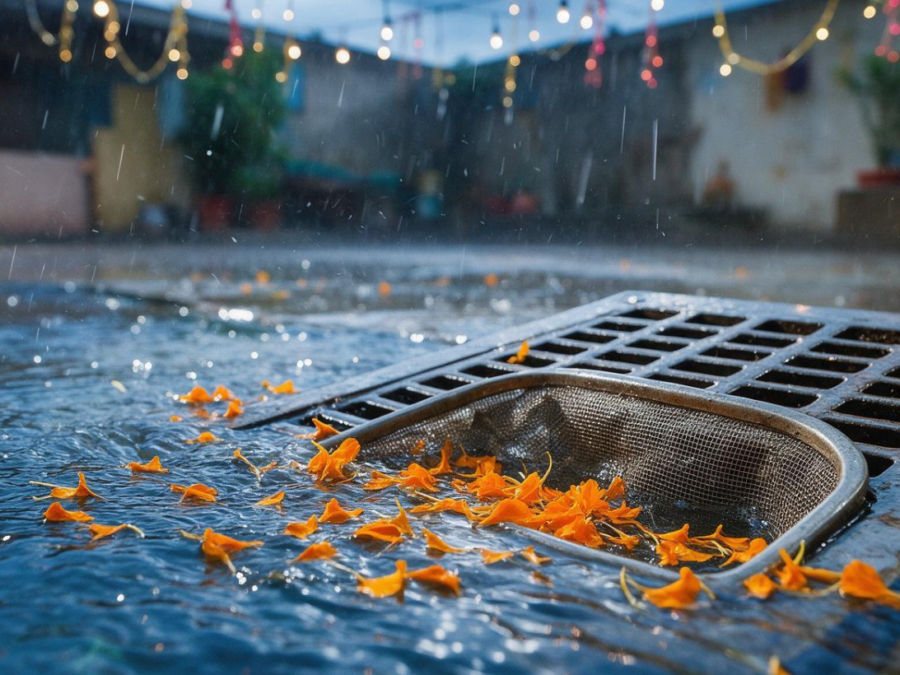
Rainwater harvesting should support responsible water use and urban flood management. Its design must account for peak hourly or daily rainfall and the site’s ability to handle incoming runoff.
Annual rainfall can inform an estimate of harvesting potential. It cannot, on its own, establish the capacity required during an intense event.
A campus plan should therefore examine inlets, filters, storage, recharge capacity and overflow together. Maintenance must keep those routes working as intended.
How does water affect workers and the wider economy?
Water affects workers through drinking supplies, sanitation, hygiene and the conditions around their workplace. These are economic concerns because people perform the work that businesses sell. An assessment of water and GDP should include labour conditions alongside pumps, pipes and production equipment.
An office can have functioning computers and still need dependable sanitation to remain suitable for staff. A workshop needs water arrangements that match its activities and workforce.
Outside the site, flooded access routes may disrupt travel or deliveries. The effect depends on local conditions; businesses should document it rather than assume a fixed loss.
The OECD’s discussion of workers and risks identifies environmental degradation and climate hazards as concerns for informal workers. Its relevance here is the link between environmental conditions and livelihoods.
A useful facility review includes drinking-water arrangements, washrooms, cleaning practices and drainage near entrances. Assign someone to examine each condition.
That work needs coordination. Facility teams manage equipment and water flows. Human resources teams handle staff concerns. Operations teams record interruptions.
Bring those records together where they describe the same event. You can then understand how water conditions affect the people needed to keep the business working.
What should businesses measure before claiming economic benefits?
Businesses should measure water use, quality and operating outcomes before claiming economic benefits. Compare records over a consistent boundary and explain changes in output or occupancy. A reduction in total consumption alone does not prove that the site became more efficient.
Production may have fallen. An office may have fewer occupants. A metre may have been replaced.
Without those details, the same consumption change can support very different explanations.
Begin with the site boundary. Identify incoming supplies, internal transfers, reuse streams and discharge. Distinguish water circulating within a process from new water entering the site.
Next, choose an output measure that fits the activity. A factory can compare water with accepted production. A hotel can consider occupied room-nights. The measure should help the team interpret demand.
Track interruptions separately. Note the duration, affected activity and recorded cause. Include quality-related events as well as supply interruptions.
For financial claims, explain what the calculation covers. Distinguish measured expenses from estimates and avoid treating potential benefits as achieved results.
Your evidence should answer these questions:
- Which water stream changed?
- What operating activity did it support?
- Did output or occupancy change?
- What treatment and maintenance did the change require?
- Which benefit was measured, and which remains an estimate?
This gives an ESG director a defensible account and a facility manager a usable operating record.
Applying the 4R framework to economic performance
EcoLive’s 4R framework connects water demand, treatment, reuse and rainfall management through Reduce, Reuse, Recycle and Recharge. Its economic purpose is to help a site understand and manage the water supporting its activities. Each intervention needs its own operating evidence.
Reduce begins with demand. Examine leaks, fixtures, process practices and unnecessary flows. A lower reading becomes useful when the team can explain why it fell.
Reuse considers whether a water stream can serve another suitable purpose. Define the receiving use and its quality requirements before changing the routing.
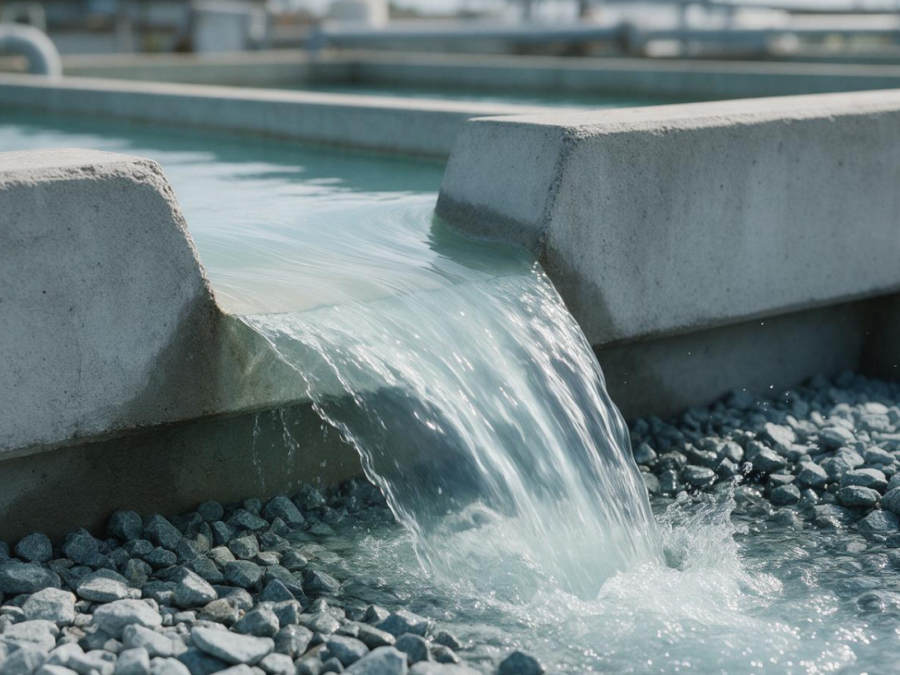
Recycle involves treatment that prepares water for further use. Include the treatment plant’s energy, chemicals, servicing and monitoring in the assessment.
Recharge addresses suitable rainfall capture and movement into the ground where site conditions permit. Plan filtration, maintenance and safe overflow alongside it.
These steps belong within one water balance. Otherwise, a site can report improvements in separate systems without knowing how they affect overall demand.
EcoLive’s 4R water balance framework provides the connecting structure.
Choice should lead the investment. A business can decide that dependable water, appropriate reuse and managed runoff deserve attention because they support its operations and surroundings.
Reporting requirements may ask for evidence. The physical work gives that evidence substance.
How should a board evaluate water investment?
A board should evaluate water investment against a defined operating need, a credible design and a maintenance plan. Ask what the investment will improve and how the team will verify that improvement. Broad promises about economic growth cannot replace evidence from the site.
Start with the activity being protected. Is the proposal about process water, sanitation, reuse, rainfall management or several linked functions?
Then examine the design basis. For rainwater infrastructure, ask which rainfall conditions the system must handle. For reuse, ask which water-quality requirements govern the receiving use.
Maintenance belongs in the approval decision. Identify who will inspect filters, service equipment, examine overflow routes and retain records.
The discussion should also cover the surrounding area. A site shares roads, drainage and groundwater with other users. Its water decisions can have consequences beyond its own accounts.
The United Nations partnership entry on equitable water governance concerns a different region. It does not provide an Indian GDP estimate, but it offers a useful governance question: whose needs enter a water decision?
For an Indian campus or plant, answer that locally. Examine staff needs, neighbouring drainage conditions and the relevant responsibilities before approving the work.
Frequently asked questions
Water’s economic importance is best explained through the activities it supports and the evidence available for each claim. The following distinctions help business leaders discuss the subject without assigning an unsupported GDP percentage or promising benefits that a site has not measured.
Can we say that a fixed share of India’s GDP depends on water?
Not from the evidence supplied here. Water supports many sectors, but assigning a fixed share requires a defined method and data that separate water’s contribution from labour, energy, capital and other inputs.
Is a lower water bill proof of better water management?
A lower bill alone does not prove better water management. Check whether consumption, output, occupancy, supply arrangements or pricing changed, then examine whether suitable quality and service continuity were maintained.
Does installing a sewage treatment plant establish reuse?
Installing a sewage treatment plant does not establish that its treated water is being reused appropriately. The site must identify suitable receiving uses, provide the necessary routing and monitor water quality.
Should rainwater harvesting be sized from annual rainfall?
Annual rainfall alone is insufficient for sizing rainwater infrastructure. Design must consider peak hourly or daily rainfall, catchment conditions, filtration, storage or recharge capacity, and safe overflow.
Can a factory’s water savings be reported as national GDP growth?
A factory’s measured water savings cannot automatically be reported as national GDP growth. Report the site’s verified operating and financial outcomes separately; a national claim needs wider economic analysis.
Request a Water Assessment
Ask EcoLive to examine your site’s water balance, quality requirements, reuse opportunities and rainfall routes through the 4R framework.
+91 9871472211 | ecolive.in
connect@ecolive.in