Water Management and Air Pollution: A Site Guide
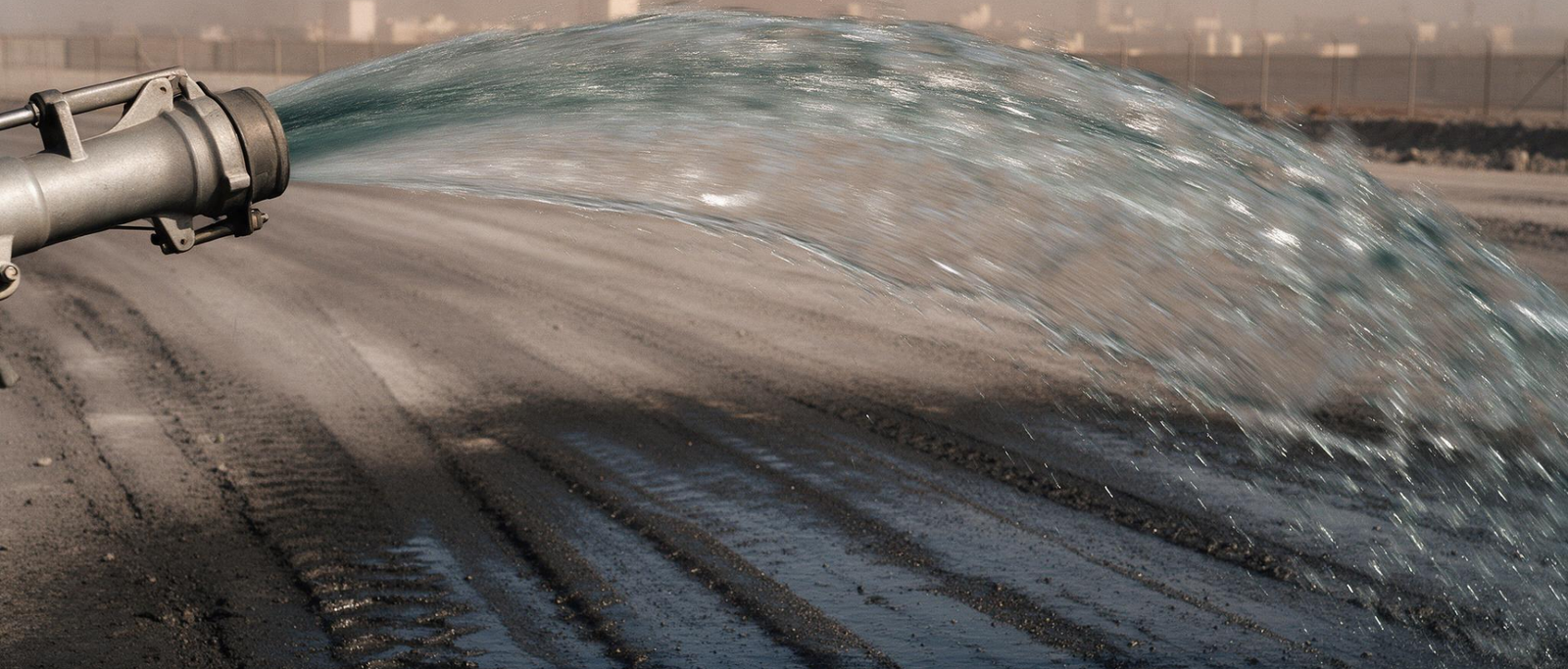
A wet road shows that water was used. It doesn’t prove the air is cleaner.
For corporate facility teams preparing for poor air quality, that distinction matters. Water management and air pollution connect through dust control, rainfall, surface conditions and wastewater handling. Understanding those connections helps businesses manage their own contribution and use water responsibly.
TL;DR: Water can help control specific dust sources, but regional smog requires action on the emissions behind it. Start with source control, measure water demand, verify whether treated water suits the task, and keep contaminated runoff away from recharge structures. Report water savings and air-quality outcomes separately.
Why do Delhi’s smog and Singapore’s haze need different explanations?
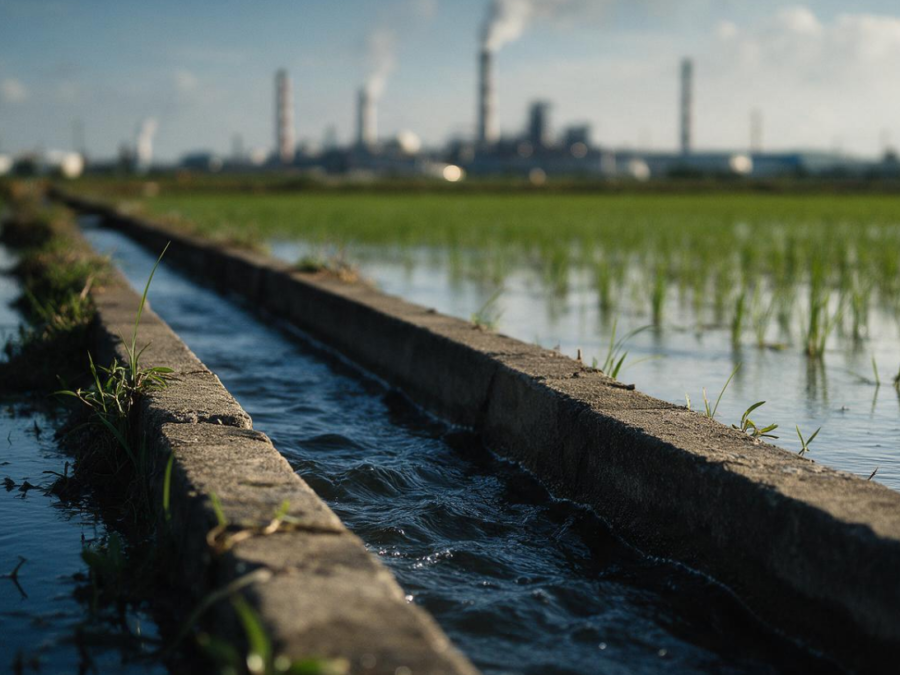
Similar skylines can have different causes. Delhi’s polluted air can involve local emissions, transported pollution and weather that limits dispersal. Singapore’s haze can involve smoke from regional fires. A facility’s response should follow local advisories and its own source assessment.
Water has several roles in these processes. Rain can remove some airborne particles. Humidity, however, can make some particles absorb moisture and grow, reducing visibility. Humid air isn’t the same as cleansing rain.
Dry surfaces can also release dust when vehicles or machinery disturb them. In peat landscapes, drainage and drying can increase susceptibility to fire. These connections operate at different scales.
For an Indian campus or factory, the practical question is: which activities on our site can we improve?
Step 1: Control dust where it starts
Inspect exposed soil, loose materials, vehicle routes and contractor activities before adding spray points. Covering stockpiles, repairing damaged surfaces and containing cutting or grinding can reduce the need for repeated wetting.
Walk the site with facilities, housekeeping and contractor supervisors. Record the location, activity, responsible person and corrective action.
Be specific. “Cover the material pile beside the loading bay” gives someone a job they can complete and verify.
Check combustion equipment separately. Generator exhaust requires equipment maintenance and appropriate emission controls. Pavement spraying doesn’t address that source.
Step 2: Make dust-control water part of your water balance
Record where water comes from, how much the task uses and where it goes afterwards. A water balance tracks water entering, moving through and leaving a site. It gives water the same operational attention businesses already give energy.
Start with meter readings, treatment logs and operating schedules. Label estimates clearly. An untracked hose can add demand that never appears in departmental reports.
Apply EcoLive’s 4R framework: Reduce, Reuse, Recycle, Recharge:
- Reduce: improve handling and housekeeping before increasing water application.
- Reuse: assess suitable existing water streams for defined tasks.
- Recycle: treat water to the quality its next use requires.
- Recharge: direct suitable rainwater through assessed, maintained pathways.
Use the Water Balance Optimiser to explore site scenarios, then validate assumptions through measurement.
Step 3: Verify treated water before using it
Water from a sewage treatment plant (STP) may suit certain dust-control tasks, but treatment alone doesn’t establish suitability. Water quality, application method and exposure conditions must match the intended use and applicable requirements.
Fine spraying needs particular care because people may inhale droplets. Have a competent specialist review test results, nozzle arrangements and proximity to entrances or ventilation intakes.
Clearly identify reused-water outlets and prevent connections with drinking-water supplies. Give operators instructions for normal operation and treatment failures.
Available water needs an appropriate destination. Where spraying is unsuitable, choose another control method.
Step 4: Protect rainwater and recharge pathways
Keep dirty wash water separate from rainwater collection and recharge routes. Cleaning moves material off a surface; it may also move that material into drains. Follow the flow to its final destination.
Inspect loading bays, workshops and waste-storage areas for connections that could carry oil, chemicals or industrial residues into recharge structures.
Rainwater harvesting supports responsible water use and runoff management. It doesn’t establish a reduction in regional smog.
For system capacity, assess peak hourly or daily rainfall and site drainage conditions. Annual rainfall can help estimate collection potential, but it isn’t the basis for sizing peak flow capacity. The Runoff Calculator can support initial assessment.
Step 5: Measure each outcome separately
Track water quantities, completed dust controls and air-quality observations as distinct records. Lower freshwater demand supports a water-saving claim. It doesn’t, by itself, demonstrate that your site reduced ambient air quality index (AQI) readings.
Keep a simple operational record: water source, quantity, task, maintenance checks and responsible owner. If particle monitoring will support public claims, seek technical advice on instruments, placement and interpretation.
What can your team substantiate? Report that precisely.
Frequently asked questions
Does humidity always improve air quality?
No. Humidity can make some particles absorb moisture and grow, reducing visibility. Rainfall can remove some airborne particles, but the two processes differ.
Can rainwater harvesting reduce regional smog?
Rainwater harvesting supports runoff management and suitable water uses. A regional smog-reduction claim requires separate evidence about emissions and air-quality outcomes.
What should a facility manager do first?
Inspect active dust sources, combustion equipment, water supplies and drainage connections. Assign each action to an owner before expanding wet controls.
Request a Water Assessment
EcoLive reports 1,150 completed projects across 11 states and 652M+ litres saved. Its water-balance consultancy helps corporate teams examine demand, reuse opportunities, rainwater pathways and measurement through the 4R framework.
Bring your meter records, treatment reports and drainage drawings. Start with a measured understanding of your site.
Request a Water Assessment: +91 9871472211 | ecolive.in