What the 2026 Water Conservation Mandate Means for Indian Buildings
As of April 2026, over 15.84 crore rural households have been connected to rural drinking water systems under the National Water Mission. But urban India faces a different reality. The government is shifting its focus toward urban and industrial water use, launching a nationwide 2026 water conservation mandate between July and August 2026. For building owners and facility managers, this means new scrutiny on how much water you extract and how much you put back.
TL;DR: The 2026 government push for water conservation targets rainwater harvesting and groundwater recharge in urban centers. Buildings must move beyond basic compliance to avoid penalties. Implementing the 4R framework (Reduce, Reuse, Recycle, Recharge) ensures your facility meets the mandate while cutting tanker costs permanently.
What is the 2026 water conservation mandate?
The 2026 water conservation mandate is a nationwide policy push focusing on rainwater harvesting, groundwater recharge, and the restoration of water bodies. Driven by initiatives like the Jal Mahotsav 2026 campaign, the government requires urban buildings and industries to actively manage their water balance. This means installing verified systems to capture monsoon runoff rather than letting it flood city streets. You can read more about rainwater harvesting compliance to understand the specific municipal requirements.
Why does the 2026 water conservation mandate target industrial water?
The 2026 water conservation mandate targets industrial water conservation because urban groundwater depletion is accelerating. During the World Water Day Conclave 2026, officials reinforced the need for data-driven governance and industry-led conservation. Factories and large commercial buildings extract massive volumes of groundwater daily. Without mandated recharge protocols, cities risk running dry before summer ends.
What does the 2026 water conservation mandate mean for building owners?
Building owners must now treat water management as a core operational metric under the 2026 water conservation mandate. The focused nationwide campaign undertaken in mid-2026 made it clear that passive compliance is no longer enough. If your site relies on a basic, unmaintained recharge pit, you are likely failing the actual intent of the mandate.
Many facilities install systems just to pass an inspection. These setups typically fail within two years. Instead, facility managers need to look at the complete 4R framework for water balance. By measuring what comes in and what goes out, you protect your building from compliance notices and rising water tanker bills.
Comparing Compliance vs. Outcome-Driven Systems
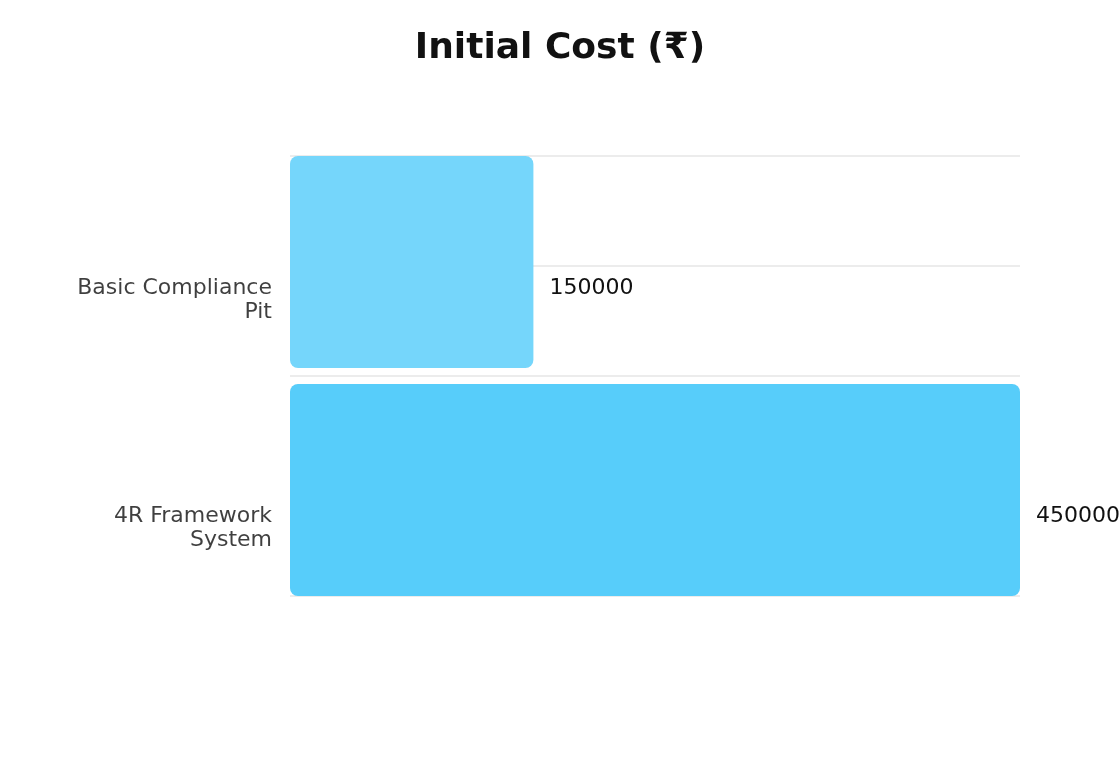
Note: Costs are indicative for a standard commercial plot in Delhi NCR.
How to prepare your building for compliance?
To prepare your building for compliance, you need to audit your current water infrastructure and verify your recharge capacity. Start by clearing your catchments before the monsoon hits. Next, ensure your existing harvesting pits are desilted. For corporate entities, aligning these physical upgrades with BRSR water compliance reporting will satisfy both municipal inspectors and board directors.
Do not wait for a government notice to fix a dry borewell. If you are unsure where your site stands, we can help you measure your exact water balance and design a system that pays for itself.
FAQ
What is the 2026 water conservation mandate in India? The 2026 water conservation mandate is a nationwide policy push focusing on rainwater harvesting, groundwater recharge, and the restoration of water bodies. It requires urban buildings and industries to actively manage their water balance rather than just checking a compliance box.
Why is industrial water conservation becoming mandatory? Industrial water conservation is becoming mandatory because urban groundwater depletion is accelerating rapidly. The government requires data-driven governance and industry-led conservation to prevent cities from running out of water before summer ends.
How can buildings comply with the new water rules? Buildings can comply by auditing their current water infrastructure and desilting existing recharge pits before the monsoon. Implementing the 4R framework (Reduce, Reuse, Recycle, Recharge) ensures you measure and improve your total water balance.
Call EcoLive at +91 9871472211 or visit ecolive.in to request a Water Assessment today.