BRSR Water Compliance India: How to Report BRSR Core Water Metrics for FY26
Starting in FY 2025-26, the Securities and Exchange Board of India (SEBI) requires the top 250 listed companies to assure water metrics across their value chain, with the mandate phasing in the top 1,000 companies over time. Most facility teams track their main water bill. Very few track the exact volume of water recycled, discharged, or lost to evaporation across multiple sites. This gap turns a straightforward engineering task into a major compliance risk for boards. Achieving true BRSR water compliance India requires measuring every drop.
TL;DR: BRSR Core compliance is expanding. For FY26, value chain assurance is mandatory for the top 250 listed Indian companies, acting as a glide path for the top 1,000. This expands beyond your own operations to include your value chain. Companies must report total water withdrawal, consumption, and discharge. A measured water balance and the 4R framework provide the exact data required for assurance.
What are the mandatory metrics for BRSR water compliance India?
The BRSR framework mandates that obligated entities disclose total water withdrawal, total water consumption, and total water discharge. These figures must be verified and assured under the BRSR Core framework. This means estimates are no longer acceptable. An auditor will check your metres, your bills, and your discharge logs. If your corporate sustainability team cannot prove where every kilolitre went, your assurance report will flag it.
How does the FY26 value chain rule change water reporting?
From FY26 onward, BRSR Core compliance became mandatory for the upstream and downstream value chain partners of the top 250 listed companies. You are now responsible for the water footprint of your primary suppliers. If you buy materials from a factory in a water-stressed zone, their water risks become your water risks. You must collect their withdrawal and discharge data. This shifts the burden from simple internal reporting to comprehensive supply chain water auditing.
How do you establish a site-level water balance for BRSR water compliance India?
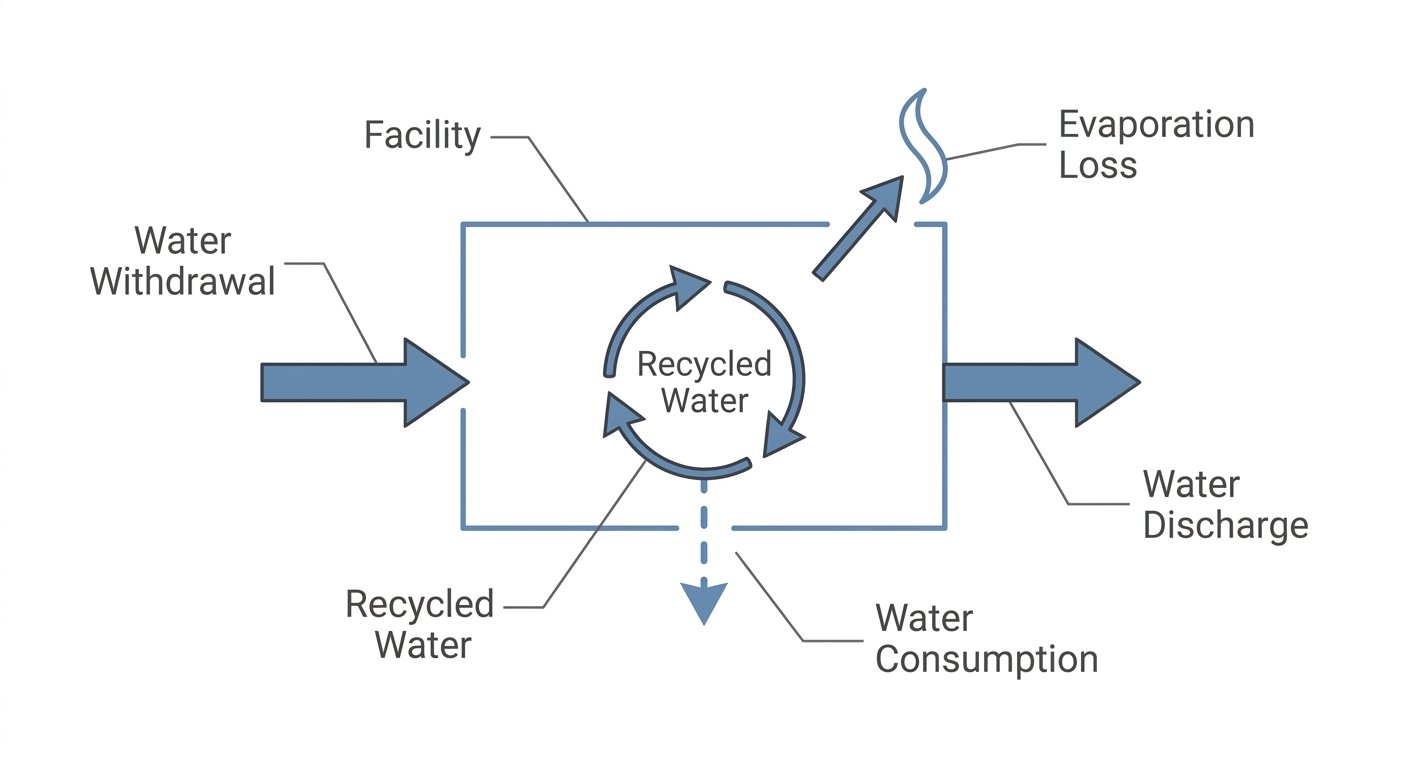
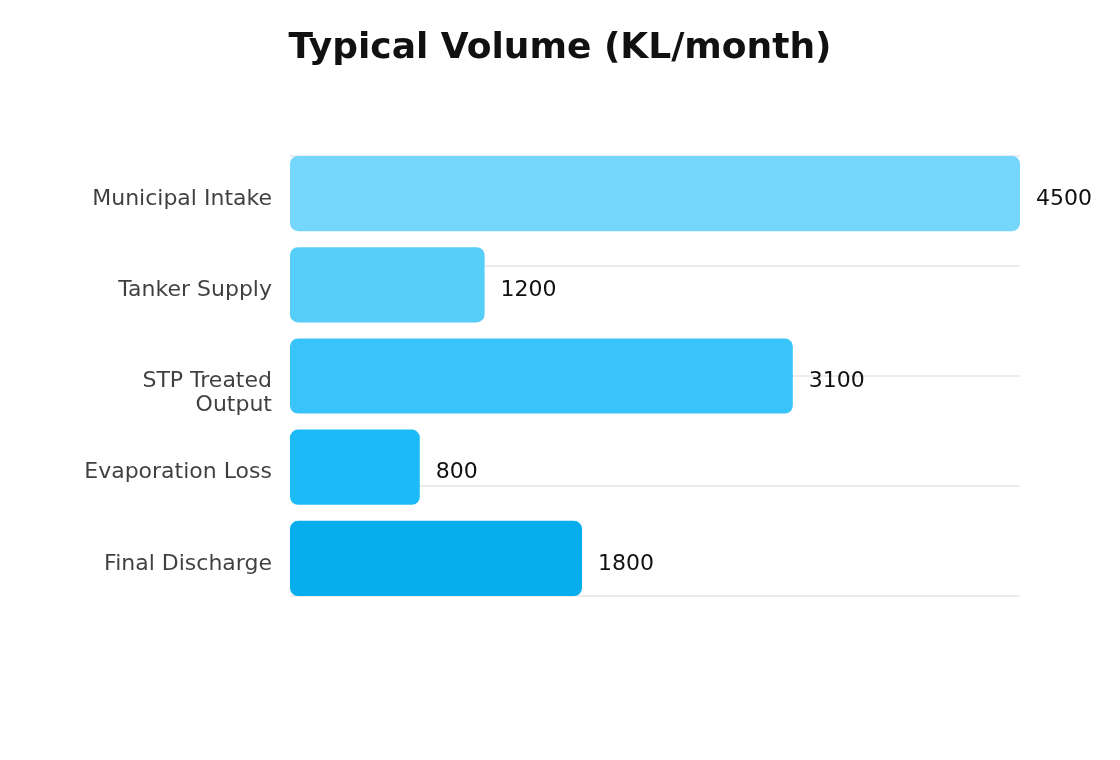
You establish a site-level water balance by mapping the exact volume of water entering the facility versus the water leaving it. You cannot report what you do not measure. The first step to BRSR water compliance India is establishing a baseline for every facility. Start by mapping the water in versus the water out. Install smart metres on borewells, municipal lines, and tanker discharge points. Then, metre your Sewage Treatment Plant (STP) output and your RO reject lines. The difference between your intake and your measured output is your consumption and loss.
We use a specific diagnostic approach for this. You can see how this works in our water balancing services.
How does the 4R framework improve your ESG water metrics?
The 4R framework improves your metrics by physically reducing intake, reusing RO reject, recycling treated wastewater, and recharging aquifers. Once you have your baseline, you need to improve the numbers before the reporting deadline. The most effective method is the 4R framework: Reduce, Reuse, Recycle, Recharge.
We saved 12 million litres annually for a leading auto-parts manufacturer. Here’s how. By upgrading their STP and routing RO reject water directly to their cooling towers, we reduced their municipal intake by 30% and instantly improved their BRSR metrics.
Do not treat these as separate projects. They work as one unified system. Route your RO reject water to cooling towers (Reuse). Upgrade your STP to ensure the output is fit for flushing (Recycle). Direct your rooftop monsoon runoff into scientifically designed recharge pits (Recharge). Every kilolitre you recover here directly improves the metrics you file in your BRSR FY26 water metrics report.
How do you build water systems that deliver lasting value?
You build lasting water systems by designing them for true water security rather than merely ticking a compliance box. Systems built with a long-term vision consistently outperform those installed merely to pass an audit. When a company installs a rainwater harvesting pit as part of a holistic water strategy, they invest in quality engineering and proactive maintenance.
The BRSR mandate is the first attempt by a regulator to encourage detailed environmental performance sharing. Build for true water security first, ensuring your infrastructure remains robust year after year. The compliance data will naturally follow.
How do you verify and assure your data for the auditor?
You verify your data by maintaining digital logs, calibration certificates, and photographic evidence for every water intervention on site. The final step is preparing for the auditor. SEBI requires reasonable assurance on your BRSR Core metrics.
Gather your calibration certificates for all water metres. Keep a digital log of your daily STP output. Maintain photographic evidence of your rainwater harvesting structures before and after the monsoon. Your ESG director needs a board-ready dashboard that tracks these numbers across all sites. If you need help structuring this data, our team provides end-to-end measurement and verification.
Call EcoLive at +91 9871472211 or visit ecolive.in to request a corporate water assessment today.
FAQ
What are the mandatory metrics for BRSR water compliance India? The BRSR framework mandates that obligated entities disclose total water withdrawal, total water consumption, and total water discharge. These figures must be verified and assured under the BRSR Core framework using physical measurement rather than estimates.
How does the FY26 value chain rule change water reporting? From FY26 onward, BRSR Core compliance is mandatory for the upstream and downstream value chain partners of the top 250 listed companies. You must now collect and report water withdrawal and discharge data directly from your primary suppliers.
How do you build water systems that deliver lasting value? You build lasting water systems by designing them for true water security and operational efficiency rather than just compliance. Investing in quality engineering and proactive maintenance ensures the infrastructure survives the monsoon and naturally delivers the required ESG data.