What the 2025 CGWB Groundwater Assessment Means for Haryana and Rajasthan Buildings
India extracts around 241 billion cubic metres of groundwater annually. The latest data from the 2025 CGWB Groundwater Assessment highlights a marginal improvement in national recharge rates. But for water-stressed states like Haryana and Rajasthan, the reality on the ground remains severe. Facility managers and building owners must look beyond basic compliance to secure their water supply.
TL;DR: The 2025 CGWB assessment shows national groundwater extraction at 60.63%. While overall recharge increased slightly, Haryana and Rajasthan remain over-exploited. Buildings in these states face higher tanker costs and stricter regulations, making the 4R framework essential for operational survival.
What did the 2025 CGWB Groundwater Assessment reveal?
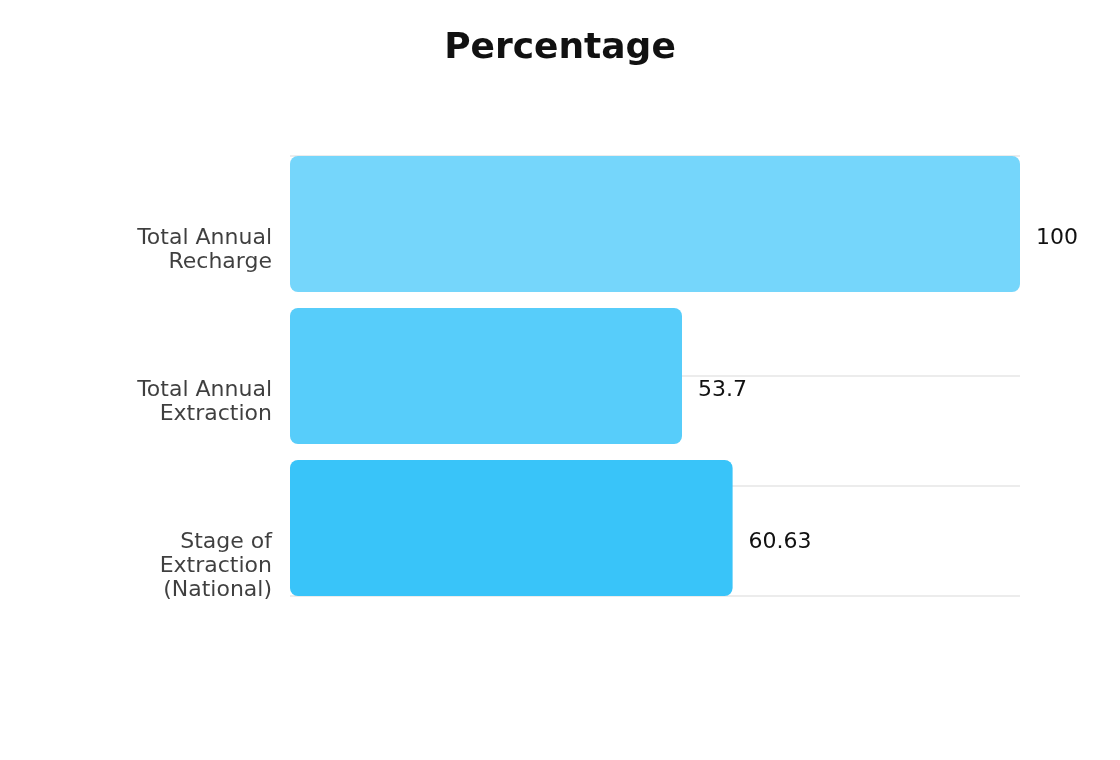
What are the main findings of the latest groundwater report? The 2025 CGWB assessment reveals that the total annual groundwater recharge in India is 448.52 BCM. The stage of extraction stands at 60.63% nationally.
This data shows a slight improvement in the national average. However, regional disparities are massive. India remains the largest consumer of groundwater globally, extracting 241 billion m³ every year. The report serves as a warning for regions where extraction far exceeds natural recharge.
How does the 2025 CGWB Groundwater Assessment impact buildings in Haryana and Rajasthan?
How will the new data affect commercial real estate in the north? Buildings in Haryana and Rajasthan will face tighter municipal scrutiny and rising water costs because these states are classified as over-exploited.
When regional groundwater levels drop, borewells run dry faster. Facilities are forced to buy expensive tanker water. The new assessment report gives municipal bodies the data they need to enforce stricter extraction limits. If you manage a factory or a large residential complex in Gurugram or Jaipur, your current water strategy is likely at risk.
Why basic compliance is no longer enough
Many buildings install rainwater harvesting systems simply to pass an inspection. This approach creates weak systems that fail within two to three years. We know that compliance-driven rainwater harvesting fails because it ignores the actual water balance of the site.
When you design for a checkbox, you miss the opportunity to capture the monsoon runoff effectively. A failed system means you pay for water twice: once for the broken infrastructure and again for the daily tankers. True water security requires a system designed by choice and engineered to measure outcomes.
What should facility managers do next?
What are the immediate steps for building owners? Facility managers should audit their existing water infrastructure and implement the 4R framework to cut water tanker costs.
Start by measuring your daily consumption and borewell yield. Fix leaks to reduce demand. Route your treated wastewater for non-potable reuse. Finally, upgrade your rainwater harvesting pits before the monsoon arrives. For corporate entities, aligning these steps with BRSR water compliance ensures your board reports are backed by verified data.
Stop paying for tankers when the sky provides water for free. EcoLive helps buildings in Haryana and Rajasthan measure, reduce, and recharge their water. Call +91 9871472211 or visit ecolive.in to request a Water Assessment today.
FAQ
What is the total groundwater recharge in India for 2025? According to the 2025 CGWB assessment, the total annual groundwater recharge in India is 448.52 Billion Cubic Metres (BCM). This marks a slight improvement over previous years.
What is the national stage of groundwater extraction? The 2025 report indicates that the national stage of groundwater extraction stands at 60.63%. This figure highlights the ongoing pressure on natural aquifers.
How does the CGWB report affect buildings in Haryana and Rajasthan? Because Haryana and Rajasthan are over-exploited, buildings will face stricter extraction limits, higher tanker costs, and closer municipal scrutiny. Facility managers must adopt proactive water conservation measures.