BRSR Water Disclosure Checklist 2026: What Top 1,000 Companies Must File
The Securities and Exchange Board of India requires the top 1,000 listed companies to submit a BRSR water disclosure by answering 140 specific questions for their Business Responsibility and Sustainability Reporting. Water is no longer just a qualitative summary; it is a strict, auditable metric aligned with global reporting standards.
TL;DR: BRSR mandates that India’s top 1,000 listed companies disclose verified water consumption across four specific sources. Estimated data may not pass SEBI’s assurance audits. Companies should implement smart metering and the 4R framework to document their water balance and meet the FY26 filing deadline.
What data is mandatory for BRSR water disclosure?
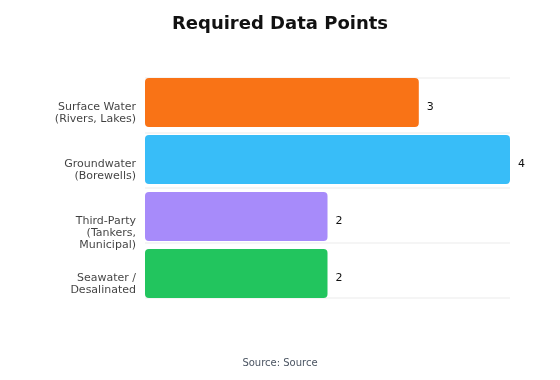
BRSR water disclosure requires companies to report verified withdrawal and consumption volumes across surface water, groundwater, third-party water, and seawater. Rough estimates are generally not accepted. According to the official SEBI mandate, auditors typically check your metre logs against your production output.
If your facility relies on tankers, that counts as third-party water. If you pump from a borewell, that is groundwater, which must align with CGWB reporting guidelines. Every drop should be accounted for in your final water balance.
Does BRSR Core require supplier water data?
Yes, BRSR Core requires companies to track value chain metrics for value chain partners comprising 75% of purchases or sales by value. This means your water reporting now involves your suppliers.
You cannot just measure your own factory. You must verify that your top suppliers are also tracking their water use. If a key vendor relies on unmetered groundwater, their reporting gap can become a board-level risk.
What is the FY26 BRSR water disclosure checklist?
The FY26 BRSR water disclosure checklist requires four steps: installing verifiable meters, mapping discharge, auditing suppliers, and closing the water balance. To pass a BRSR audit, ESG directors need this documented trail.
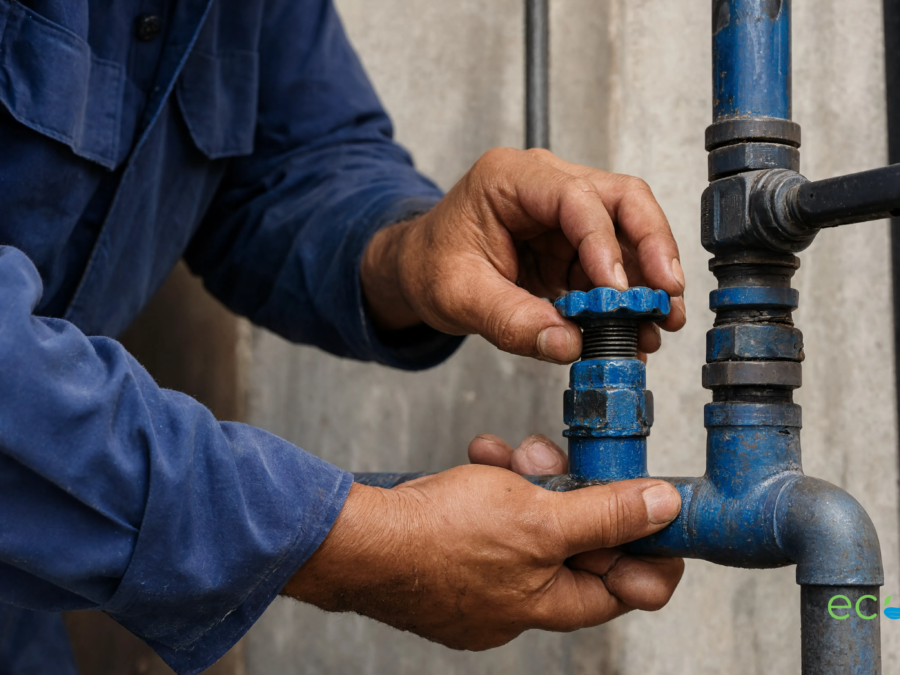
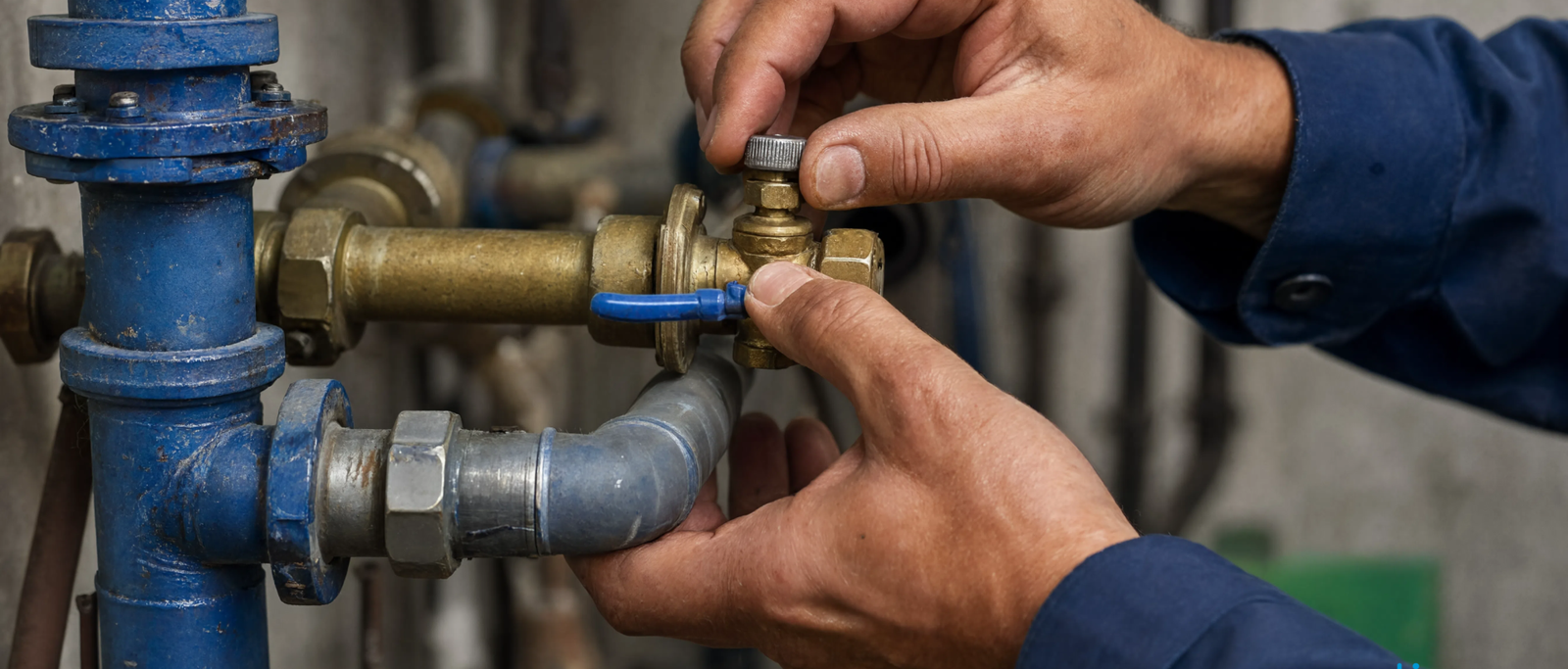
1. Install verifiable source metering You should have physical proof of intake. Relying on municipal bills is often not enough if you also use borewells. You should implement smart water metering at every intake point.
2. Map your discharge and reuse BRSR asks for net consumption. You must document how much water leaves your site or gets reused. If your STP treated water goes to a municipal drain, you may lose that efficiency credit.
3. Audit your top suppliers Identify the key vendors that make up the 75% value chain threshold. Send them a simplified water audit form. If they lack data, you may need to help them establish a baseline.
4. Close the water balance Your total intake minus your verified discharge equals your consumption. If the numbers do not match your production data, the auditor may flag it. A professional water balancing assessment helps address these discrepancies before the filing date.
BRSR Water Source Tracking Requirements
Why do estimated metrics fail the BRSR audit?
Estimated metrics fail the audit because they lack a verifiable paper trail linking consumption to production output. When a company guesses its tanker volumes or borewell yield, the math can break down during a site inspection.
If you claim to recycle 50% of your water but have no flow metres on your STP return lines, the auditor may mark you as non-compliant. You need physical hardware backing up your spreadsheet. You can read more about exactly what ESG directors need to file to avoid these basic errors.
How does the 4R framework close your compliance gap?
The 4R framework (Reduce, Reuse, Recycle, Recharge) closes your compliance gap by providing a structured methodology to track, reduce, and verify your water use. A reliable way to generate board-ready ESG data is to optimize the underlying plumbing.
When you reduce demand, your intake drops. When you reuse STP water, your consumption metric improves. When you recharge rainwater, you help offset your groundwater footprint. EcoLive has used this exact framework across numerous projects to help save millions of litres of water. We do not just consult on ESG and BRSR compliance; we engineer the physical systems that support your data.
Stop guessing your water metrics. Get your data verified before the deadline.
Call EcoLive at +91 9871472211 or visit ecolive.in to Request a Water Assessment.
FAQ
What water data is mandatory under BRSR? Companies must report verifiable withdrawal and consumption data for surface water, groundwater, third-party water, and seawater. Rough estimates are generally not accepted.
Does BRSR Core require supplier water data? Yes. BRSR Core requires value chain ESG disclosures for value chain partners comprising 75% of your purchases or sales by value.
How can companies prove their water consumption? Companies should install smart water metering at all intake and discharge points. This creates an auditable water balance that matches their production output.