How Indian Manufacturing Plants Are Cutting Water Intensity by 30%
Every day, urban India generates 72,368 million litres of sewage. Only 28% is treated. For manufacturing plants, this reality translates into rising operational costs and water bills exceeding ₹5 Lakh per month. We helped a mid-sized auto-components plant save 20,000 litres daily. Here is how. Leading plants are voluntarily targeting a 30% cut in water intensity to improve sustainability and reduce overhead. This guide explains exactly how facility managers are achieving this without interrupting production.
TL;DR: Manufacturing plants in India are reducing their freshwater dependence by 30% using the 4R framework (Reduce, Reuse, Recycle, Recharge). Facility managers can achieve a 12 to 24-month ROI by conducting a water audit, reusing STP-treated water for non-potable processes, and capturing rooftop runoff to recharge borewells.
Why is industrial water use efficiency critical in 2026?
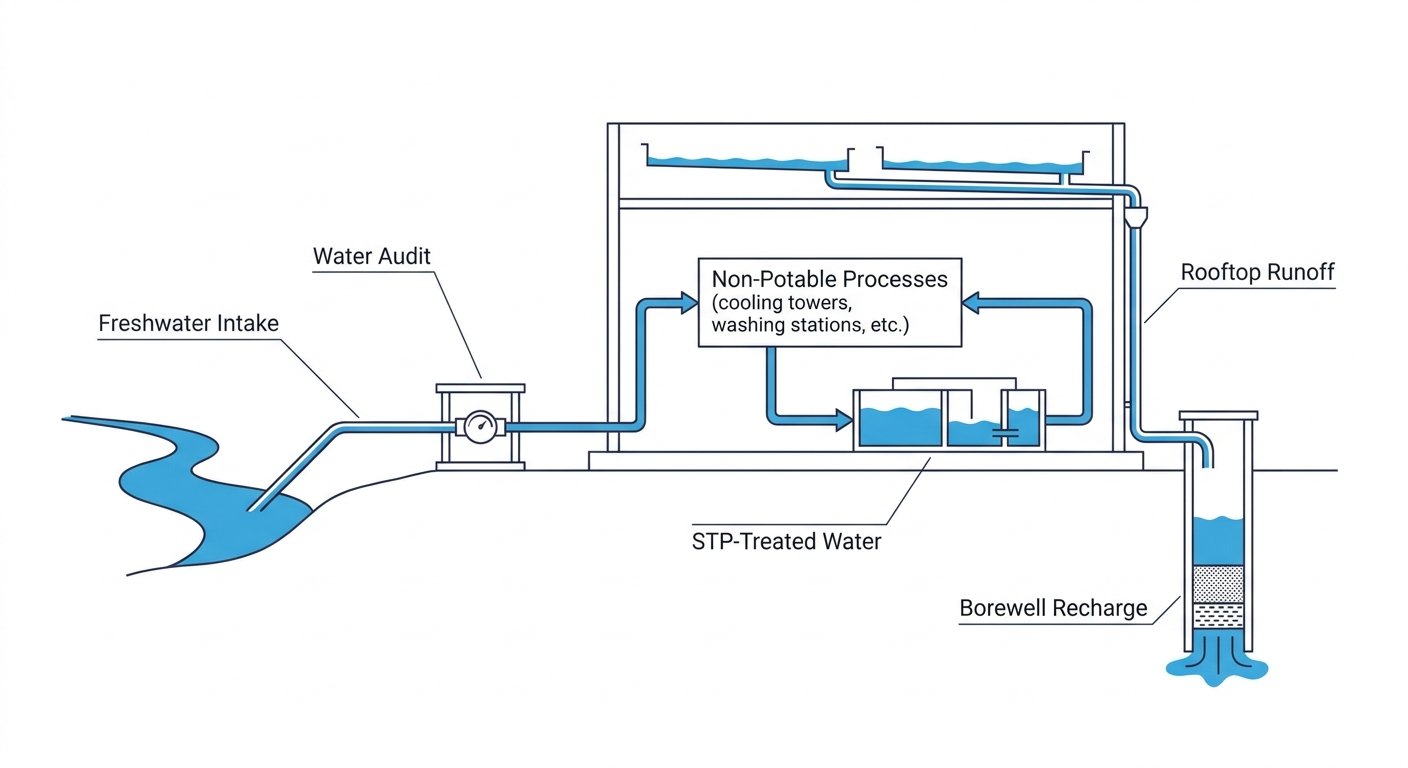
Industrial water use efficiency is critical because strict pollution board mandates and corporate sustainability goals are prompting factories to find alternative water sources. Companies using less water and reusing it during production protect natural resources and significantly lower their operating costs.
Many facility heads wait for a compliance notice before acting. A smarter approach treats water as a core operational metric. By repairing minor leaks as soon as possible, you minimize water waste and protect your profit margins. Proactive water management optimizes factory uptime. Implementing efficient water usage, recycling, and rainwater harvesting ensures your production lines operate with consistent, reliable water security.
How does the 4R framework reduce factory water costs?
The 4R framework reduces factory water costs by mapping the entire water balance and matching water quality to the specific use case. This unified approach delivers reduced operational cost for both water procurement and treatment chemicals.
You cannot manage what you do not measure. The first step in the 4R framework is reducing demand at the source through smart metering. Next, you reuse RO-reject water for cooling towers or floor washing. Then, you recycle effluent through an ETP or STP. Finally, you recharge the aquifer using rooftop rainwater. This creates a closed-loop system that drastically cuts your reliance on expensive private tankers.
What is the cost difference between tankers and recycled water?
The cost difference between tanker water and recycled water is substantial. Tanker water typically costs between ₹120 and ₹180 per kilolitre, while reusing STP-treated water costs only ₹15 to ₹25 per kilolitre for treatment and pumping.
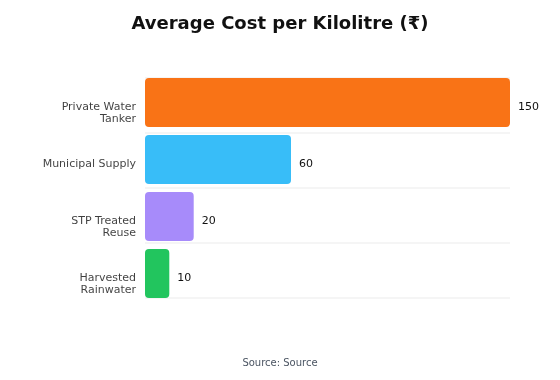
Switching from tankers to STP treated water reuse is the fastest way to improve your bottom line. Factories paying ₹3 Lakh monthly for tankers can often reduce that bill by 60% within six months of implementing proper reuse routing.
How to start an industrial water audit today?
You start an industrial water audit by establishing a baseline of your current consumption, metering all major inflow points, and identifying where wastewater is currently discharged. Implementing rainwater harvesting, efficient irrigation systems, and recycling requires accurate initial data.
Most factories have an STP but discharge the treated water into municipal drains. A proper water balancing assessment will tell you exactly how many litres you can safely route back into your cooling towers or toilets. This data is also required for ESG and BRSR compliance, making the audit a dual-purpose investment.
Stop paying for water twice. Call EcoLive at +91 9871472211 or visit ecolive.in to request a comprehensive industrial water assessment for your facility.