TL;DR
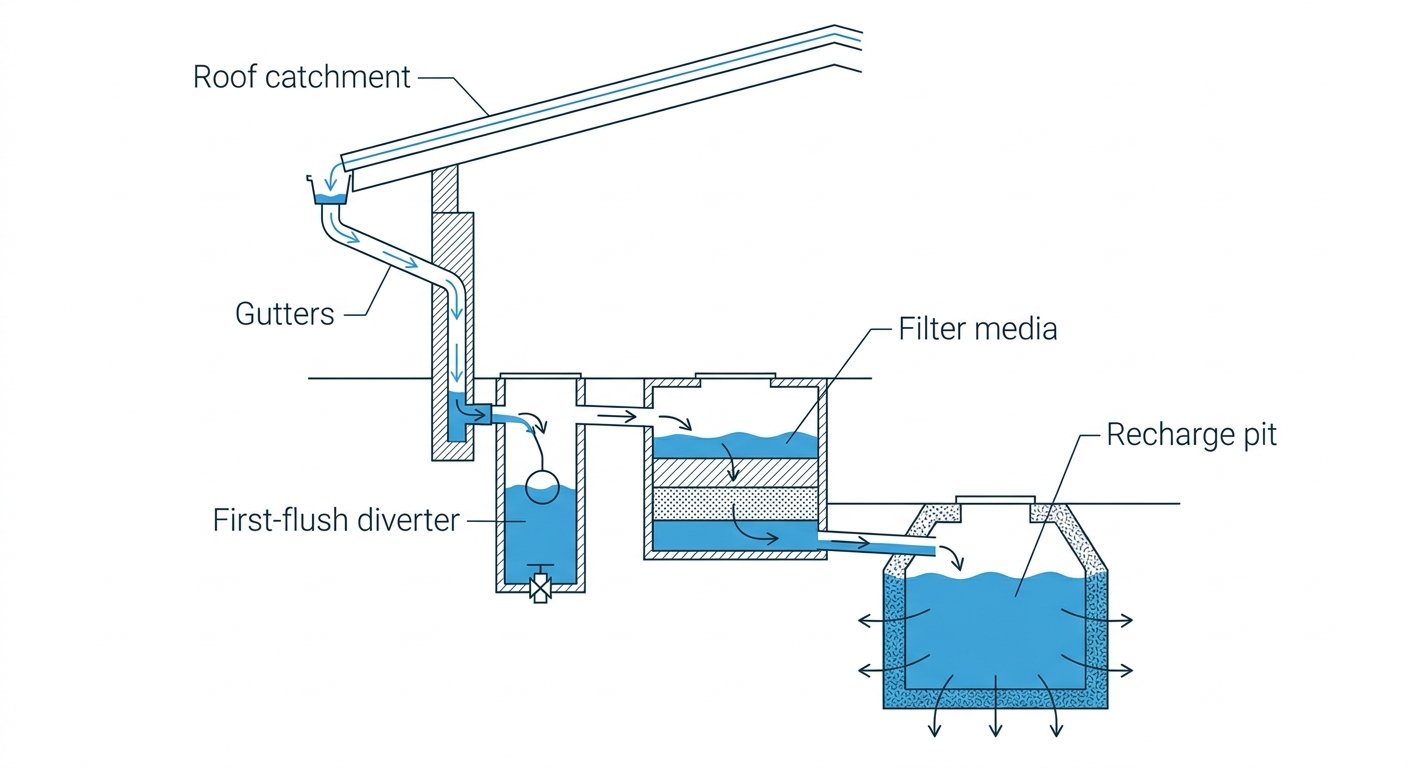
A rainwater harvesting system loses throughput quietly, year after year, until a monsoon arrives and the recharge pit will not drain. Almost none of that is design failure. It is unowned maintenance. Three components degrade on predictable schedules, and a pre-monsoon service plus one recorded percolation measurement is enough to keep a system at its day-one performance.
Why systems fail without ever breaking
There is no alarm when a harvesting system starts underperforming. The tank does not crack and the pipes do not collapse. Instead the filter media compacts, the first-flush diverter stops diverting, and the recharge pit silts up from below. Each is invisible for a year and obvious by the third.
The failure is gradual, which is exactly why it goes unowned. Nobody is ever handed a system that is broken today.
What to service, and how often
Maintenance frequency is not the same for every part, and treating it as one annual visit is why parts get missed. These are the intervals we recommend for a typical apartment or commercial rooftop system in India.
| Component | Services per year |
|---|---|
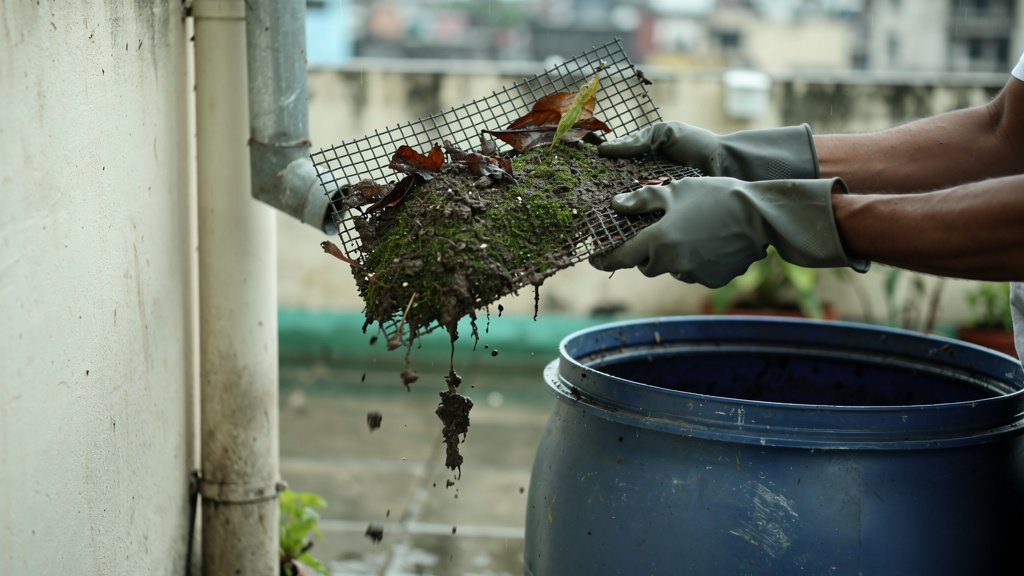
| Roof catchment and gutters | 3 |
| First-flush diverter | 3 |
| Filter media backwash | 2 |
| Recharge pit inspection | 2 |
| Full pit desilting | 1 |
The clustering matters more than the totals. Two of those services should fall in the six to eight weeks before the monsoon, because that is when the system is about to be stressed and when you can still act.
What each gap actually costs
Deferring maintenance does not produce a bill on the day you defer it. It produces a slow loss of yield, which shows up as tanker purchases months later. The rough shape of that loss, by how long a system has gone unserviced:
| Years unserviced | Typical throughput retained (%) |
|---|---|
| 1 | 90 |
| 2 | 75 |
| 3 | 55 |
| 4 | 35 |
These are indicative figures from systems we have assessed, not a formula. The pattern is what to take from them: the decline is not linear, and the third year is where most systems cross from underperforming to visibly failing.
The one number worth recording
Most maintenance reports say the system was inspected and found satisfactory. That sentence carries no information you can act on.
A percolation time does. Fill the recharge pit with a known volume, time how long it takes to drain, and write the number down with the date. If it drained 1,000 litres in 40 minutes in year one and takes 90 minutes in year three, the system is telling you something specific, and you can act before the monsoon rather than during it.
Ask your maintenance provider for that number. One that cannot produce it is not measuring anything.
Where to start if you have no schedule
Take one measurement today and write it down. That is your baseline, and every future reading becomes meaningful the moment you have it.
Then put the pre-monsoon tasks in a calendar with a name against each one. The work is neither complicated nor skilled. The failure mode was never technical.
Frequently asked questions
How much does annual maintenance cost? For a typical apartment system it is a modest line item: filter media, a few hours of labour, and occasional valve replacement. Rebuilding a failed recharge structure costs many times more, because it means excavation and disposal inside a working building.
Can we do this ourselves? The pre-monsoon roof, gutter and diverter checks are well within a facilities team’s capability. Filter media replacement and pit desilting are better contracted.
How do we know if our pit has already failed? Standing water around the recharge area more than 24 hours after heavy rain means percolation has failed.
EcoLive designs, installs and maintains rainwater harvesting, greywater and wastewater treatment systems for residential and commercial buildings across India. To have an existing system assessed, call +91 9871472211.