TL;DR: Delhi now enforces rainwater harvesting for buildings on plots of 100 sq m and above. With the 2026 compliance deadline passed, non-compliant properties risk penalties reported between ₹50,000 and ₹5,00,000, plus water-supply cuts. Compliance means a functional, verified system, not just a recharge pit. The fastest way to know where your building stands is a water audit.
For years, rainwater harvesting (RWH) in Delhi was treated as a paperwork formality: a line on a building plan that was rarely checked and even more rarely enforced. That era is ending. With the Delhi government renewing its citywide push in 2026 and a mid-year compliance deadline now behind us, the mandate has shifted from “recommended” to “enforced.” If your building sits on a plot of 100 square metres or more, this directly affects you.
What the mandate actually says
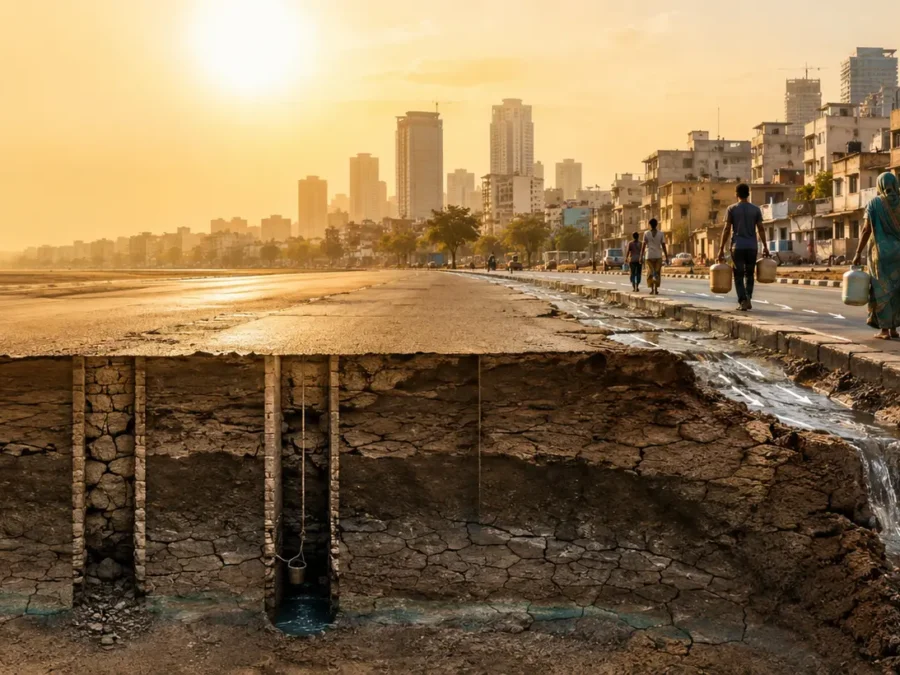
Under Delhi Jal Board (DJB) norms, rainwater harvesting is mandatory for buildings on plots of 100 sq m and above, covering residential, commercial, and institutional properties alike. The requirement itself is not new; DJB notifications going back several years established it. What changed in 2026 is intent: the government has publicly reaffirmed the rule and attached a firm deadline to it, framing RWH as a core response to Delhi’s deepening groundwater crisis, where large parts of the city lean on stressed aquifers for much of the year.
The penalties being reported
According to DJB norms and recent reporting, non-compliant properties face escalating consequences. Coverage has cited penalties for residential plots in the 100 to 500 sq m range of roughly ₹50,000 to ₹5,00,000, alongside the risk of water-supply disconnection for properties that fail to install a functional system. Exact figures and timelines vary by property type and by DJB circular (the official notices are published on the DJB circulars portal), so the safest reading is simple: the cost of ignoring the mandate now clearly outweighs the cost of complying.
Why “having a pit” is not the same as compliance
This is the point most building owners miss. Compliance is not a recharge pit dug in a corner and forgotten. The mandate is really asking for a functional system: one that actually captures roof and surface runoff, filters it, and either recharges it into the ground or stores it for reuse, and, crucially, one that can be verified. In practice that means a design matched to your roof area and soil conditions, plus the documentation (an adequacy or completion certificate) that demonstrates the system works. A pit that silts up in a single monsoon helps no one and will not survive an inspection.
What to do now: the practical path
If your building is over 100 sq m and you are unsure whether you comply, treat this as a short, finite project rather than an open-ended worry:
- Audit first. Establish your roof catchment area, existing drainage, soil percolation, and whether any old RWH structure still functions. This reveals the real gap.
- Design to the site, not to a template. The right recharge or storage capacity depends on your runoff and geology. An oversized pit wastes money; an undersized one fails compliance.
- Install and document. Build the system and keep the evidence: drawings, photos, and the certificate that lets you demonstrate compliance if asked.
- Maintain it. Filters and recharge structures need periodic cleaning, especially before and after the monsoon, or performance quietly degrades.
The bigger picture
It is worth stepping back from the penalty headline. Delhi’s mandate exists because the city is drawing down groundwater faster than it recharges. A well-designed RWH system does more than avoid a fine. It captures water that would otherwise run off into drains, eases pressure on the municipal supply, and, over time, helps stabilise the water table beneath your own building. The deadline is the stick; a more resilient water future is the actual point.
At Ecolive, this is the work we do every day: we audit, design, install, and (the part that matters most) verify that a rainwater harvesting system actually performs, rather than just ticking a box. If Delhi’s deadline has left you unsure where your building stands, a proper water audit is the fastest way to turn uncertainty into a clear, compliant plan. Book a water audit with Ecolive: call +91 98714 72211 or email connect@ecolive.in.