Zero Liquid Discharge Process vs Partial Recovery: A Guide for Indian Textile Units
Textile manufacturing consumes up to 150 litres of water to produce a single kilogram of fabric. State pollution control boards increasingly mandate a zero liquid discharge process for these high-intensity units. Facilities that fail to upgrade face immediate closure notices and production halts.
TL;DR: A zero liquid discharge system recovers over 95 percent of wastewater for factory reuse. While partial recovery systems cost less to operate, they leave textile units exposed to compliance violations. Implementing the 4R framework alongside a zero liquid discharge plant ensures long-term operational security and reduces freshwater dependence.
What is a zero liquid discharge process in textiles?
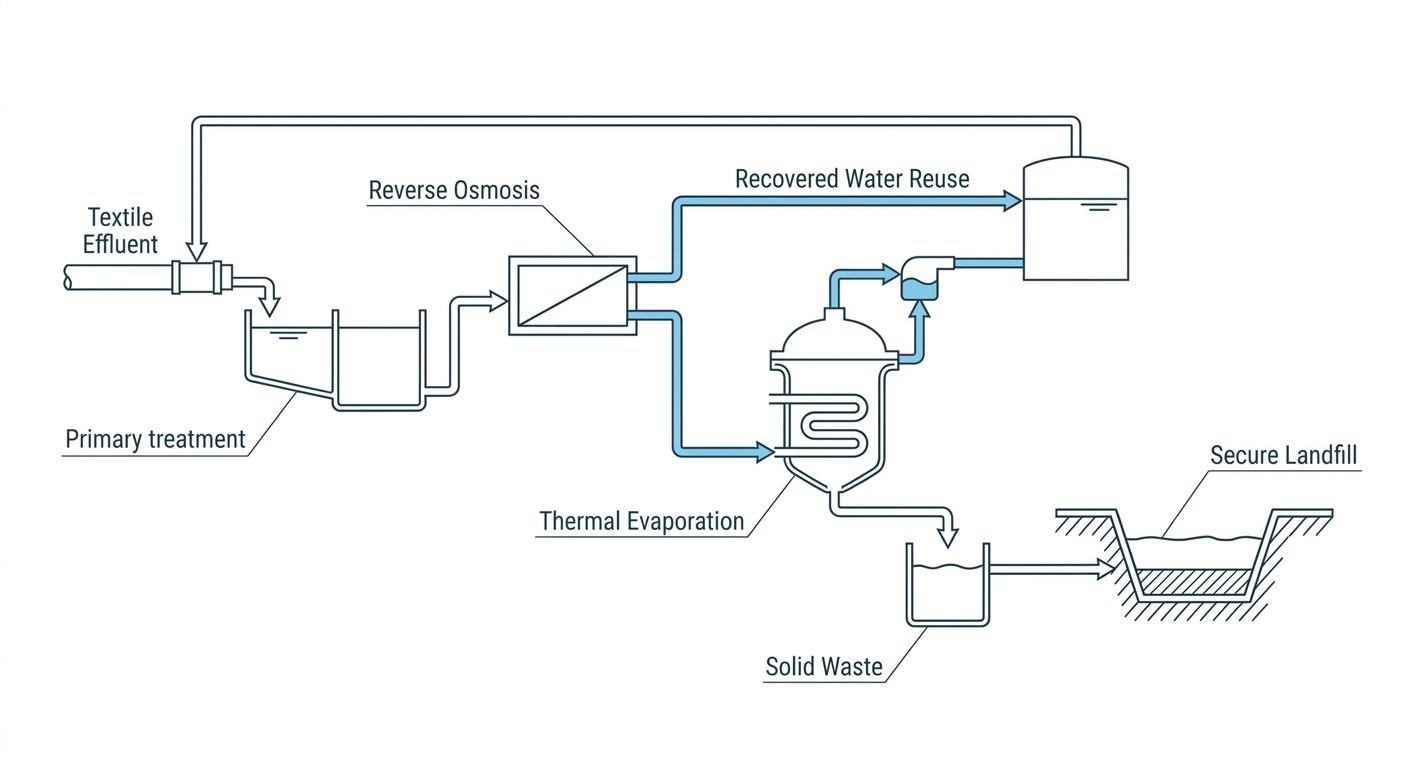
A zero liquid discharge process is an engineering approach that recovers all industrial wastewater and leaves zero discharge at the end of the treatment cycle. The system treats effluent through reverse osmosis and thermal evaporation. The factory reuses the recovered water in production. The remaining solid waste goes to a secure landfill. This closed-loop cycle completely eliminates wastewater discharge into municipal drains or local water bodies.
Textile units generate highly toxic effluent loaded with dyes, salts, and heavy metals. Standard effluent treatment plants remove the toxicity but still discharge the liquid. A zero liquid discharge plant forces the facility to reuse the water, cutting freshwater intake drastically.
Partial Recovery vs Zero Liquid Discharge System
Factory owners often debate between upgrading to a partial recovery setup or investing in a full zero liquid discharge plant. The choice dictates both compliance safety and long-term operating costs.
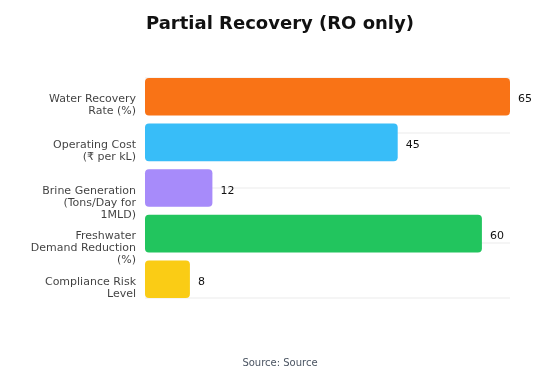
Partial recovery systems rely strictly on reverse osmosis. They recover about 65 percent of the water but leave a highly concentrated brine reject that still requires disposal. Pollution control boards aggressively monitor this brine discharge.
A true zero liquid discharge system adds multi-effect evaporators (MEE) or agitated thin film dryers (ATFD) to the reverse osmosis stage. The evaporators boil off the remaining water from the RO reject. The process leaves only dry salt. This eliminates the liquid discharge entirely.
Why do textile units fail at ZLD compliance?
Textile units fail at compliance because they treat zero liquid discharge as a checkbox rather than an integrated operational system. Many factories install evaporators to secure their operating consent but turn them off to save electricity. Thermal evaporation consumes significant power. When inspectors measure the energy bills against the claimed water recovery, the mismatch triggers an immediate compliance notice.
Another common failure point is poor segregation at the source. Textile units mix high-TDS (total dissolved solids) dye bath water with low-TDS wash water. Pushing this combined effluent through a zero liquid discharge plant overwhelms the reverse osmosis membranes. The membranes foul quickly. Replacement costs soar. Proper water balancing prevents this by separating streams before they reach the treatment plant.
How much does a zero liquid discharge plant cost to run?
A standard zero liquid discharge plant costs between ₹150 and ₹200 per kilolitre to operate. Thermal evaporation accounts for nearly 70 percent of this cost. While the capital expenditure for the equipment is high, the true financial burden lies in the daily energy consumption required to boil water.
You can offset these costs by factoring in the savings from reduced freshwater purchases and eliminated disposal fees. When you route the recovered water back into the boilers or cooling towers, your tanker dependency drops. You can read more about reducing freshwater dependence in our STP treated water reuse guide.
The 4R Framework alternative to ZLD bottlenecks
Most factories view wastewater purely as a disposal problem. We apply the 4R framework to reduce the load on the zero liquid discharge system before treatment even begins.
Reduce the water used at the dye machines. Reuse the low-TDS wash water directly in earlier process stages without pushing it through the RO membranes. Recycle the heavy effluent through the ZLD plant. Recharge any uncontaminated surface runoff. This unified approach shrinks the required capacity of the evaporators. It lowers your capital cost and slashes your daily power bill.
Does a zero liquid discharge process help with ESG reporting?
Yes, a functioning zero liquid discharge process provides verifiable data for corporate sustainability reports. Large textile exporters must prove their water metrics to international buyers. The SEBI BRSR Core framework also requires top listed companies to assure their water footprint.
A closed-loop system provides exact metre readings of water recovered and freshwater saved. This data makes your ESG and BRSR compliance board-ready. You stop estimating your impact and start proving it with hard numbers.
FAQ
What is a zero liquid discharge process in textiles? A zero liquid discharge process is an engineering approach that recovers all industrial wastewater and leaves zero discharge at the end of the treatment cycle. The system treats effluent through reverse osmosis and thermal evaporation, recovering over 95 percent of the water for factory reuse.
How much does a zero liquid discharge plant cost to run? A standard zero liquid discharge plant costs between ₹150 and ₹200 per kilolitre to operate. Thermal evaporation accounts for nearly 70 percent of this cost, making energy consumption the primary expense.
Why do partial recovery systems fail compliance? Partial recovery systems recover only about 65 percent of the water and leave a highly concentrated liquid brine reject. Discharging this toxic brine violates pollution control board mandates for high-intensity textile units.
If your textile unit is facing compliance pressure or struggling with high ZLD operating costs, you need a verified water balance assessment.
Call +91 9871472211 or visit ecolive.in to request a Water Assessment.