Why Gurugram Becomes ‘Drowngram’: Fixing Urban Flooding at the Source
Recent heavy rains exposed severe infrastructure gaps across the city. Commuters found themselves stuck for hours as major roads vanished under water. Fares soared, and the city ground to an absolute halt.
TL;DR: Gurugram’s recent monsoon chaos caused 4-hour commutes and flooded roads. This happens because buildings treat rainfall as a drainage problem instead of a recharge opportunity. Capturing runoff through proper rainwater harvesting prevents surface flooding and secures groundwater for the dry months.
What happened during the Gurugram floods?
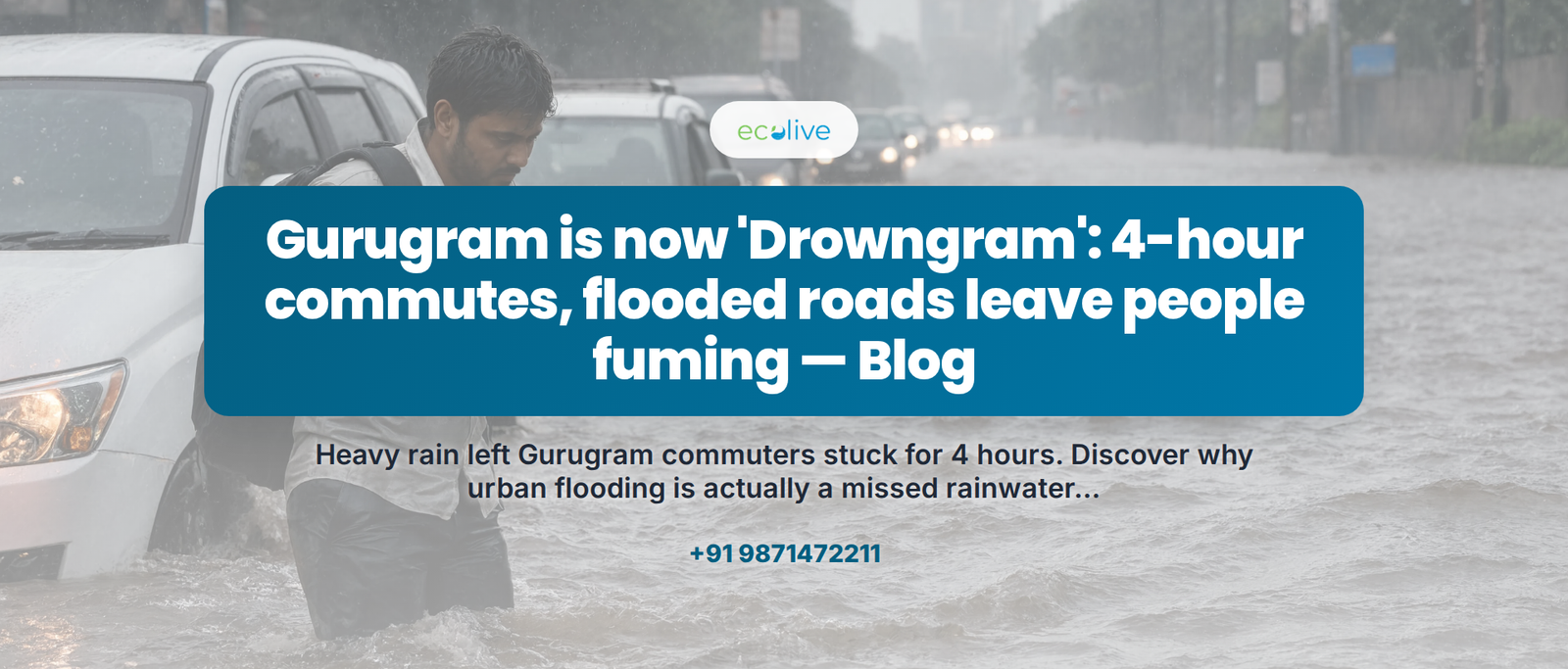
During the Gurugram floods, heavy rain caused widespread disruption by submerging major roads and paralyzing city traffic. Vehicles were forced to navigate waist-deep water after roads were submerged in over 50 areas that reported severe waterlogging. Schoolchildren were stranded, and municipal pumps failed to clear the accumulation fast enough.
The monsoon is India’s most important annual event. Yet most commercial buildings and residential societies treat it as an unexpected disaster. They rely entirely on municipal storm drains. When those drains back up, the water has nowhere to go but the streets. You can test how your own property contributes to this using an urban flooding simulator.
Why does rain cause 4-hour commutes in Gurugram?
Rain causes four-hour commutes because millions of litres of runoff hit concrete surfaces simultaneously, instantly overwhelming street drains. Commutes stretch endlessly when infrastructure was exposed by this sudden and massive volume of water. Without localized recharge pits, 100% of this runoff enters the street.
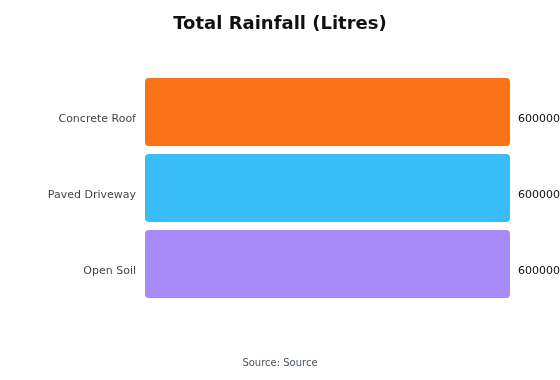
We pave our cities but forget to build a path for the water. A standard commercial building roof in Gurugram can catch enough water in three days to supply its toilets for a month. Instead of capturing it, buildings dump it into the street. The table below shows how much water a typical 1,000 square metre property generates during a standard 600mm monsoon season.
How does urban flooding affect building owners?
Urban flooding means building owners pay twice: first by losing free rainwater that could recharge dry borewells, and second by paying premium rates for water tankers in summer. If your building discharges rainwater into the street, you are actively draining your own future water supply while severe waterlogging reported outside damages the surrounding infrastructure.
Many owners wait for a government notice before acting. But as we see every year, building owners must do more than just tick a compliance box. A compliance-driven system fails in two years. An engineered system works for decades.
How can building owners fix urban flooding at the source?
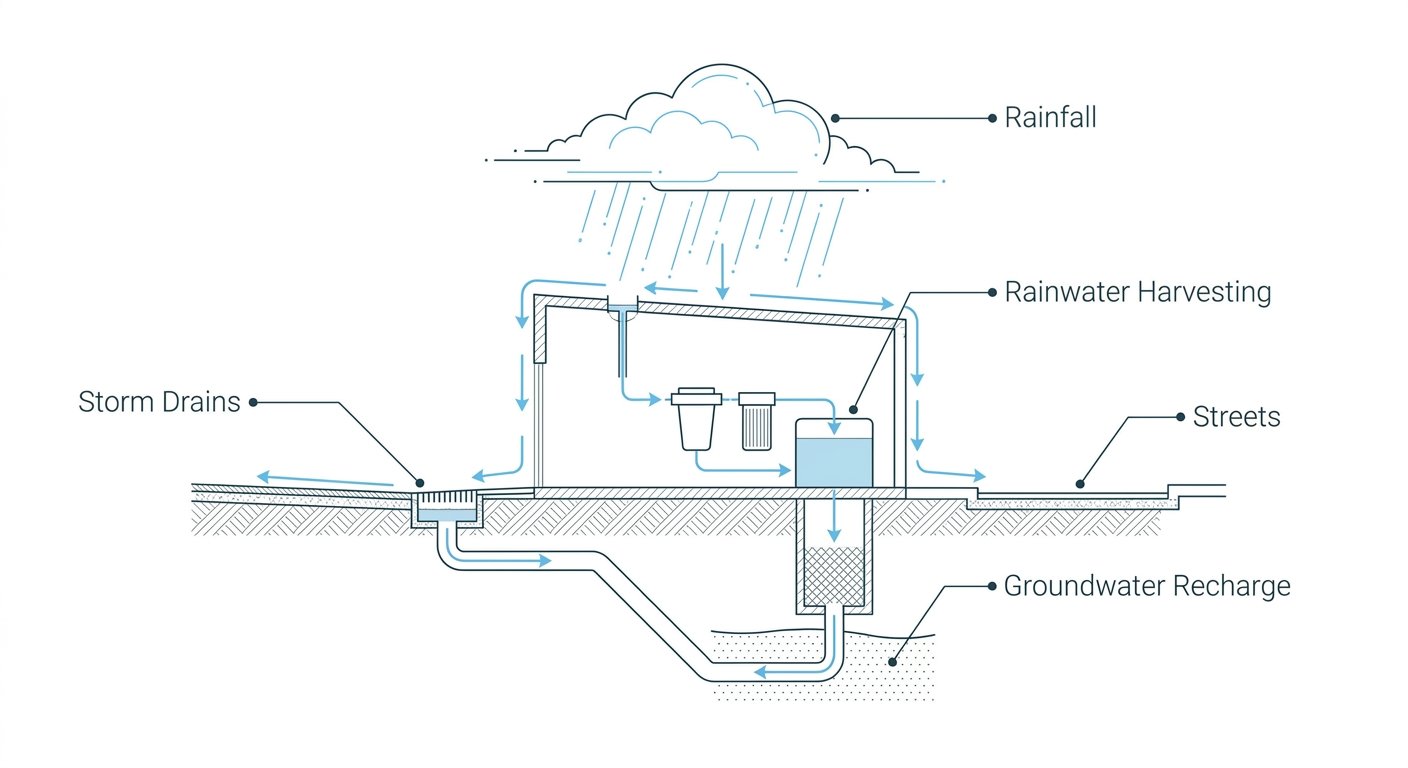
Building owners can fix flooding at the source by keeping their site’s water balance on their own property through proper rainwater harvesting. You cannot control the city drains, but you can prepare for the monsoon by capturing your runoff.
- Audit your runoff: Calculate exactly how much water hits your roof and paving.
- Size the recharge pits: Build structures that match your actual peak flow.
- Maintain the filters: A blocked filter turns a rainwater harvesting system into a mosquito breeding pond.
Every litre of water you push into a recharge well is a litre that does not flood the road outside your gate. It is also a litre you do not have to buy from a tanker next summer.
FAQ
Why does Gurugram flood so easily during the monsoon? Gurugram floods because rapid urbanization has covered natural soil with concrete. Rainwater cannot soak into the ground, so it flows directly into inadequate municipal storm drains, causing severe waterlogging.
How can building owners prevent urban flooding? Building owners can prevent flooding by installing engineered rainwater harvesting systems. Capturing roof and driveway runoff and directing it into groundwater recharge pits keeps that water off the streets.
Does a rainwater harvesting system reduce water tanker costs? Yes. By recharging groundwater during the monsoon, you improve the yield of your site’s borewells. This directly reduces your dependence on expensive water tankers during the dry summer months.
Stop treating rainfall as wastewater. Request a Water Assessment today. Call +91 9871472211 or visit ecolive.in.