State Water Reforms Framework 2026: What the New Mandate Means for Indian Buildings
On 19 May 2026, the Union Jal Shakti Minister launched a national policy that changes how Indian states measure water use. The government introduced the State Water Reforms Framework 2026 to force measurable changes in groundwater regulation and water governance.
Most facility managers treat water compliance as a local municipal issue. This new national framework shifts the baseline. States now face assessment on 75 specific indicators across five dimensions, including policy, regulation, and digitalisation.
TL;DR: The State Water Reforms Framework (SWRF) 2026 grades Indian states on 75 water governance indicators. States like Odisha are already preparing gap reviews for December 2026. For commercial buildings and factories, this means stricter local enforcement on groundwater extraction, mandatory rainwater harvesting, and treated wastewater reuse.
What is the State Water Reforms Framework 2026?
The State Water Reforms Framework 2026 is a national initiative aimed at enhancing water governance across all states and union territories by grading regional governments on how well they regulate groundwater, monitor projects, and enforce water reuse policies. States must now prove they are actively managing water demand. They cannot simply pass laws; they must show verifiable data. This federal pressure trickles down immediately to industrial and commercial water users. You can expect local pollution control boards to demand harder numbers during your next audit.
Why does the State Water Reforms Framework 2026 matter for commercial buildings?
The State Water Reforms Framework 2026 matters for commercial buildings because local authorities will tighten their own inspections to improve their scores ahead of a gap review by December 2026. Your building’s water data becomes part of your state’s compliance grade. If you run a factory or a large commercial park, your groundwater extraction limits will face closer scrutiny. The framework pushes states to enforce mandates like the AMRUT 2.0 goal, which requires cities to meet 20% of their water demand through recycled wastewater. If your STP water goes to the drain, you are a target for penalties.
How will the compliance timeline affect your operations?
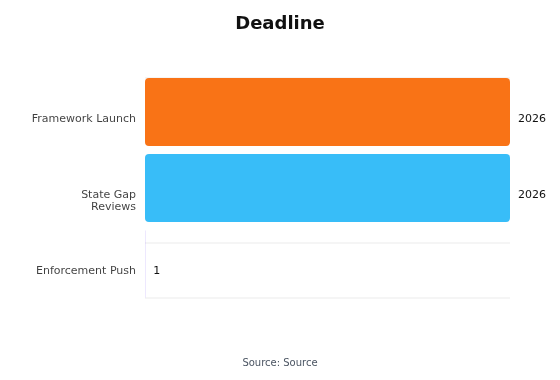
The compliance timeline will affect your operations quickly, as states are currently assessing their gaps and will push enforcement onto large consumers within the next 12 months.
| Milestone | Deadline | Impact on Building Owners |
|---|---|---|
| Framework Launch | May 2026 | States receive the 75-indicator assessment criteria. |
| State Gap Reviews | Dec 2026 | Local boards identify missing data from large consumers. |
| Enforcement Push | Q1 2027 | Stricter municipal audits on borewells and STP reuse. |
You need to prepare your site before the local inspector arrives. Waiting for a notice is a bad strategy. Read our guide on rainwater harvesting compliance to understand the difference between minimum effort and actual water security.
What must facility managers do before December 2026?
Facility managers must close their site’s water loop and establish a verified baseline of consumption, borewell reliance, and wastewater discharge before the state gap reviews conclude. First, commission a formal water balance assessment. You cannot report what you do not measure. Second, route your STP-treated water back into your cooling towers or flush tanks. Finally, align your internal reporting with the upcoming ESG and BRSR compliance standards.
If you need help measuring your site’s actual water footprint, EcoLive can help. We design systems that reduce demand, reuse treated water, recycle effluent, and recharge the aquifer.
Ready to audit your building’s water balance? Contact EcoLive at +91 9871472211 or visit ecolive.in to request a formal assessment.
— FAQ SCHEMA —