Rajasthan Water Conservation Drive: What Can Sites Do?
A statewide drive can bring attention to water conservation. A factory, hotel or campus still needs a plan for its own water supply, demand and ground conditions.
For organisations in Rajasthan, the useful question is what to do at the site. Where does water enter? Where does it go? Which changes can the facilities team maintain? Those answers give a water conservation programme a practical starting point.
TL;DR: Organisations can prepare for a Rajasthan water conservation drive by mapping their water supply and demand, inspecting existing harvesting and treatment systems, and choosing changes suited to each site. Assign owners, check water quality before reuse, and measure results over time. Check official programme announcements for applicable requirements.
What does the Rajasthan water conservation drive mean for organisations?
The proposed Rajasthan water conservation drive is an opportunity for organisations to review how their sites use and manage water. Check the state’s official announcement for the programme’s scope, launch details and any actions that apply to your organisation.
A statewide programme can cover places with very different water conditions. A warehouse roof, a hotel laundry and a factory process each present different opportunities. Their water sources, space, demand and operating schedules may differ too.
That is why a facility team should begin with its own water balance: a record of the water coming into the site, where it is used and where it leaves. A practical plan can then combine lower demand, suitable reuse and rainwater harvesting.
If your organisation has sites across Rajasthan, compare them using a common method. Avoid assuming they all need the same equipment. A shared reporting format is useful; a site-specific assessment is what makes the decision useful.
What should a facility team check before choosing a project?
A facility team should check its water sources, uses, discharge routes and existing equipment before selecting a project. Start with records you already have, then visit the places where water enters, moves through and leaves the site.
Ask the people who operate pumps, treatment systems and buildings to join the inspection. They can explain which metres are reliable, when storage runs low and which equipment needs frequent attention. Their knowledge helps you interpret the bills and drawings.
Begin with a walk through the site:
- List each water source, including municipal supply, borewells, tankers and any reused water.
- Find the metres and note what each one measures. Record gaps where a source or major use has no metre.
- Identify major uses, such as process water, cooling, washrooms, kitchens, laundry and landscaping, where relevant.
- Trace where used water goes, including treatment, reuse and discharge.
- Inspect tanks, pumps, pipes, filters and rainwater harvesting structures.
- Review water bills, tanker records, maintenance logs and available water-quality reports.
The aim is to understand the site well enough to choose what to investigate next. A missing metre reading is a gap to resolve, not a reason to estimate a saving.
EcoLive’s water audit guide for Indian sites explains how an assessment can turn these observations into a more complete picture. Keep the first record even if it has gaps. It gives the team a starting point for later comparisons.
How can a water balance guide the choice of work?
A water balance helps you compare water entering a site with its recorded uses, reuse and discharge. It can show where the team needs better measurements and where an intervention deserves closer examination.
For example, a facility may know its tanker purchases but have limited information about how water is divided between its buildings. A factory may measure its borewell supply but lack a dependable record of water sent for treatment. A hotel may have treatment records without a clear account of where treated water is used.
Each situation calls for a different next step. The first site may need metres for major buildings. The second may need to trace and measure water going to treatment. The third may need a review of treated-water quality, demand and pipe routes.
Don’t treat an unexplained difference in the balance as a confirmed leak. It could reflect a metre fault, missing record, timing difference or an unmeasured use. Investigate the difference before deciding what it means.
The water budgeting guide offers a way to connect supply, demand and planning. For a multi-site organisation, use the same definitions for each location while keeping the underlying site records separate.
Where should an organisation begin with rainwater?
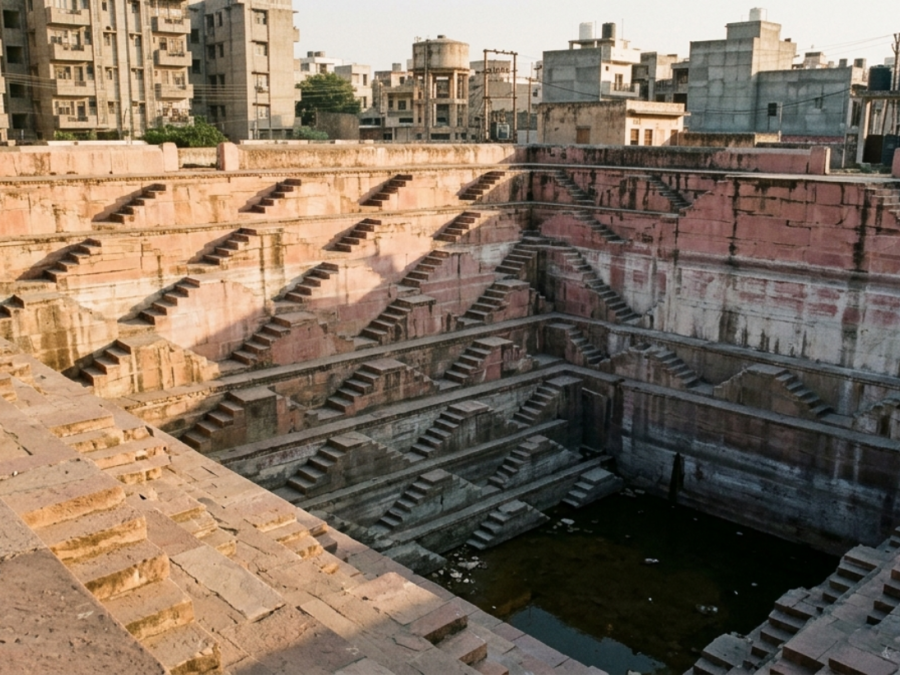
Begin by tracing where rain falls on the site and where it flows. Then assess whether suitable water can be stored for an identified use, directed towards a properly designed recharge system, or managed through a combination of approaches.
Roofs, paved areas and open ground don’t all produce water of the same quality. A clean roof may offer a different collection opportunity from a vehicle movement area. The route matters too: water can pick up dirt as it travels through gutters, drains and collection points.
Walk the catchment with the facilities team. Look for blocked gutters, damaged pipes, standing water and places where runoff leaves the property. Note nearby sources of contamination and whether existing drains separate roof water from other flows.
Next, consider what the site would do with collected water. Storage requires space, a suitable demand and a plan for water quality and maintenance. Groundwater recharge requires an assessment of local ground conditions, water quality and applicable permissions. A structure that suits one site should not be copied automatically to another.
Ask the designer to explain how the proposed system will be cleaned and inspected. The team should know who will remove debris, check filters and record issues after rainfall. A system is part of the site’s water plan, not a separate object to install and forget.
When does groundwater recharge make sense?
Groundwater recharge can be worth assessing where local ground conditions, water quality and applicable requirements support it. A site assessment should come before a decision on the type or location of a recharge structure.
The amount of open space on a property is only part of the decision. The team also needs to understand how water moves across the site, what may enter the recharge route and whether the ground can accept water. Nearby borewells and other underground services should be considered during design.
Poor-quality runoff must not be sent directly into a recharge structure. The design should address collection, filtration, access for cleaning and protection from contamination. It should also explain what happens when water cannot enter the structure as intended.
A dry or weak borewell is a reason to investigate the source and site conditions. It isn’t, by itself, proof that a particular recharge pit will restore supply. The guide to borewell recharge pit design outlines the considerations a facility team can discuss with its designer.
Keep inspection and maintenance records after work is complete. They help the site team spot blocked paths, arrange cleaning and discuss performance with the people responsible for the system.
Can existing treated water replace some freshwater use?
Treated water may replace freshwater for a suitable use when its quality, the intended application and applicable requirements align. The site must assess those conditions before changing how water is routed.
A sewage treatment plant (STP) treats wastewater, but treatment alone doesn’t establish that the water is suitable for every purpose. The required quality depends on the intended use. Separate pipework, storage, signs and operating controls may also be needed.
Start by asking where the site already uses water that doesn’t need to be potable. Then compare that demand with the treated water available and review the relevant quality requirements. The treatment team and the people responsible for the proposed use should make this assessment together.
A factory or hotel should also consider when demand occurs. Treated water available at one time may need storage before it can be used at another. That storage needs an operating and maintenance plan.
The guide to STP treated-water reuse for factories and hotels explains the questions behind matching treated water to a use. Any change should protect workers, occupants and the receiving process.
How can organisations choose between competing projects?
Choose projects by comparing the water problem each one addresses, the evidence available, site suitability and the team’s ability to operate it. A good proposal should explain how its outcome will be measured and who will maintain it.
Start with the problem, not the equipment. A site with an unreliable supply record may need measurement before it can judge a new installation. A site with an existing harvesting system may benefit from inspecting and repairing that system before adding another structure.
Ask each project owner to prepare a short proposal covering:
- The water use or supply concern the project addresses.
- The site evidence behind the proposal.
- The proposed work and any assessment still needed.
- Water-quality, ground-condition and permission checks.
- The expected effect and how the team will measure it.
- Operating duties, maintenance access and responsibility.
- The budget and approval process for that specific site.
Put proposals in front of both the facilities team and the people who approve spending. The facilities team can test whether the work fits daily operations. Decision-makers can compare the proposal with other site priorities and ask for evidence where it is missing.
For work that could affect production or occupied buildings, agree on an implementation plan with the operating team. Include access, shutdown needs if any, commissioning and handover. A project that works on paper also has to work within the site’s routine.
What should corporate and CSR teams ask of a proposed project?
Corporate and corporate social responsibility (CSR) teams should ask how a proposed project matches local needs, who will operate it and what evidence will be collected after installation. Those questions apply whether the work is on a company site or supports an institution or community partner.
Start by agreeing on the purpose with the people who will use or manage the system. Is the aim to understand water demand, improve a harvesting arrangement, assess reuse or maintain an existing structure? Each purpose needs a different scope and a different way to judge progress.
Request a site assessment before approving a design. The assessment should identify the water source, intended use, local conditions and any water-quality concerns. It should also identify permissions or local requirements that the project team needs to check.
Agree on responsibilities in writing. Name the organisation that will operate the equipment, arrange maintenance, keep records and respond when something fails. A handover should include accessible instructions and contact details for the people responsible.
For impact reporting, distinguish work completed from water outcomes measured. An installed structure is a completed activity. A measured change in water use or collection needs suitable records and a clear method. Don’t report an assumed saving as a measured result.
How should teams maintain and measure the work?
Teams should assign an owner to each system, keep inspection records and compare consistent metre readings over time. Measurement makes it possible to see whether the work is operating as intended and where further investigation is needed.
Record the starting conditions before making a change. For a metering project, note what the metre covers and when readings are taken. For a harvesting system, record its condition, cleaning needs and the route water follows. For reuse, record the intended use and the water-quality checks required for that use.
After commissioning, make the records part of the facilities routine. A useful log can include the date of an inspection, the person responsible, the condition found, any work completed and the next action. Keep supporting readings and water-quality reports with the log.
Compare like with like when reviewing water use. Occupancy, production, weather and operating schedules can affect demand. A change in a bill alone may not explain what caused the change in consumption.
If a result differs from the project’s expectation, investigate it with the operator. Check whether the equipment is working, whether the metre covers the intended flow and whether the site’s activity has changed. Use that review to decide what needs attention next.
What should leaders ask before approving a site plan?
Leaders should ask for a clear water balance, a site-specific reason for each proposed action and a named owner for maintenance. They should also ask what the team can measure now and what it needs to measure later.
EcoLive’s 4R framework gives teams a way to organise the conversation: Reduce demand, Reuse suitable water, Recycle water where treatment and use are appropriate, and Recharge rainwater where site conditions allow. The framework connects choices that are often considered separately.
An organisation doesn’t need to start every action at once. It can first resolve gaps in its records, inspect existing systems and commission the assessments needed for larger decisions. Each approved action should have an operating owner as well as a project owner.
Ask EcoLive to help you assess your site’s water priorities and confirm which requirements apply as Rajasthan releases programme details.
Frequently asked questions
Does every Rajasthan site need a rainwater harvesting system?
The right approach depends on the site’s catchment, ground conditions, water needs and applicable local requirements. Assess those factors before choosing storage, recharge or another approach.
Can a factory use treated wastewater in its operations?
A factory may be able to use treated water for a suitable purpose if the water quality meets the needs of that use and applicable requirements. The team should assess treatment, storage, pipework and operating controls before making the change.
Should a facility repair an existing harvesting system before building another?
Inspect the existing system first to understand its condition and whether it fits the site’s needs. The findings can help the team decide whether maintenance, repair, redesign or additional capacity deserves assessment.
How can a company report water savings credibly?
Keep a record of the starting conditions, measurement method and readings after the work. Explain relevant changes in site activity and distinguish estimated results from measured outcomes.
Who should maintain a water conservation project?
The organisation should name an operating owner before handover. That person or team should have access to the instructions, inspection schedule, maintenance support and records needed to manage the system.
Request a Water Assessment: Call +91 9871472211, email connect@ecolive.in or visit ecolive.in.