Every March, the calls start. “Sir, our borewell has gone dry. Do we drill a new one?” It is the most expensive question in Indian water management, and most people answer it without diagnosing the problem first. Sometimes the borewell is genuinely finished. More often, it is seasonal, recoverable, or not even a borewell problem at all.
This guide walks the sequence our field teams use: what “dry” actually means, the four real causes, how to tell them apart (including the pump failures that get misdiagnosed as dry borewells), when revival by recharge works, and what it costs. If you manage a home, farm, RWA or factory anywhere in Delhi NCR, Haryana or Rajasthan, this is the decision tree.
Key Takeaways
- “Dry borewell” usually means the water table has dropped below the aquifer zone your bore taps — the aquifer itself is rarely gone. That is a recovery problem, not a death sentence.
- Diagnose before deciding: a third of “dry” borewells we check turn out to be pump or electrical faults — dry-run protection trips, worn impellers, jammed foot valves — not aquifer depletion.
- The regional backdrop is real: Haryana extracts 137% of annual groundwater recharge and Rajasthan 147% (CGWB, 2024) — so yield loss at every summer is the trend, not an anomaly.
- Revival by direct recharge into the old casing is frequently the fastest, most economical route — with yield response typically within one to two good monsoons.
- Prevention is cheaper than revival: annual pre-monsoon service plus simple yield logging (summer depth or pump-hours) catches decline years before the bore goes dry.
What “Dry Borewell” Actually Means
A borewell is a straw into an aquifer — a saturated layer of rock or soil between impermeable layers. The bore goes “dry” when the water table falls below the zone the bore was drilled to tap. Three very different situations produce that symptom:
- Seasonal decline: the table drops each summer and recovers after the monsoon. The bore “dries” in April and flows in September.
- Structural decline: the water table has fallen permanently — over-extraction across the block has drawn it below the bore’s aquifer zone. Gurugram’s groundwater has fallen roughly 5 metres in a decade; in Ambala the level dropped from −10.5 m to −29.25 m between June 2014 and June 2024 (Government of Haryana, Assembly reply, March 2025).
- Local blockage or equipment failure: the aquifer is fine; the bore’s slits are clogged, the screen is silted, or the pump has failed. Not a groundwater problem at all.
Step 1: Diagnose Before You Decide
The cheapest hour you will spend on a dry borewell is the diagnostic. Work through this order:
- Check the pump and electrics first. A borewell that “gives nothing” is often a borewell with a tripped dry-run protector, a failed capacitor, a worn impeller or a jammed foot valve. If the pump runs but delivery is zero, or the controller trips minutes into operation, suspect equipment before aquifer. This is the single most common misdiagnosis we see.
- Compare seasons. Did the yield drop gradually each summer and recover after monsoon (seasonal), or collapse suddenly and stay down (structural or blockage)?
- Ask the neighbourhood. If borewells on adjacent plots show the same summer decline, it is the water table — a shared condition, not your casing.
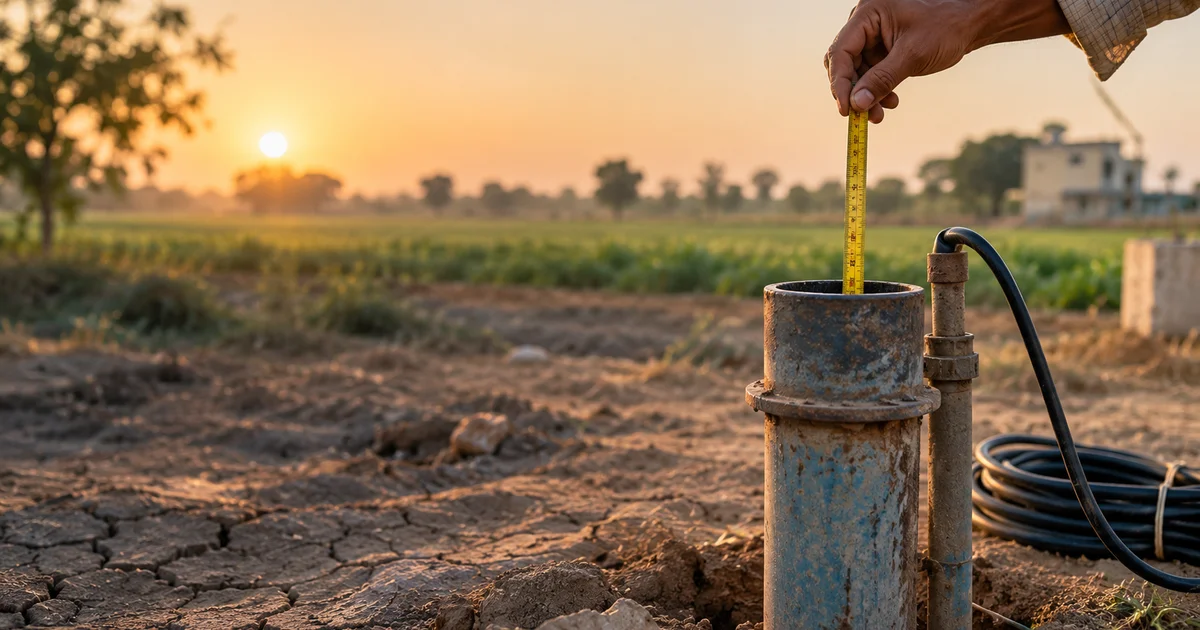
- Measure the static water level. A water level indicator (or a camera inspection for older, uncertain bores) tells you where the table sits relative to your slits and screen. “Borewell water level checking” is one of the most-searched phrases in this space for a reason — it is the decisive measurement.
- Check the casing slits and screen. Older bores silt up; clogged intake slots present exactly like a falling table.
The Four Real Causes (and What Each Points To)
| Cause | Signature | What it points to |
|---|---|---|
| Seasonal table decline | Dry every April–June, recovers post-monsoon | Recharge + storage strategy; the aquifer responds to rain |
| Structural over-extraction | Multi-year decline across the whole block; neighbours identical | Direct recharge revival + demand reduction (4R); new deeper bores only postpone |
| Clogged slits / silted screen | Gradual yield loss year-round, not seasonal | Casing rehabilitation or a replacement bore — not recharge |
| Pump / electrical failure | Sudden zero; dry-run trips; odd noises | Pump shop, not a drilling rig |
Reviving a Dry Borewell: The Recharge Route
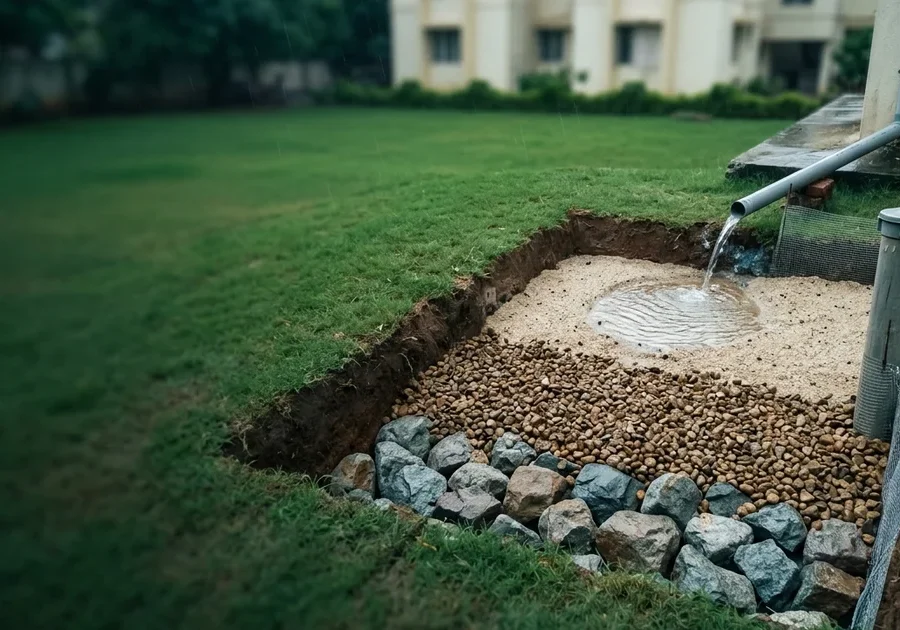
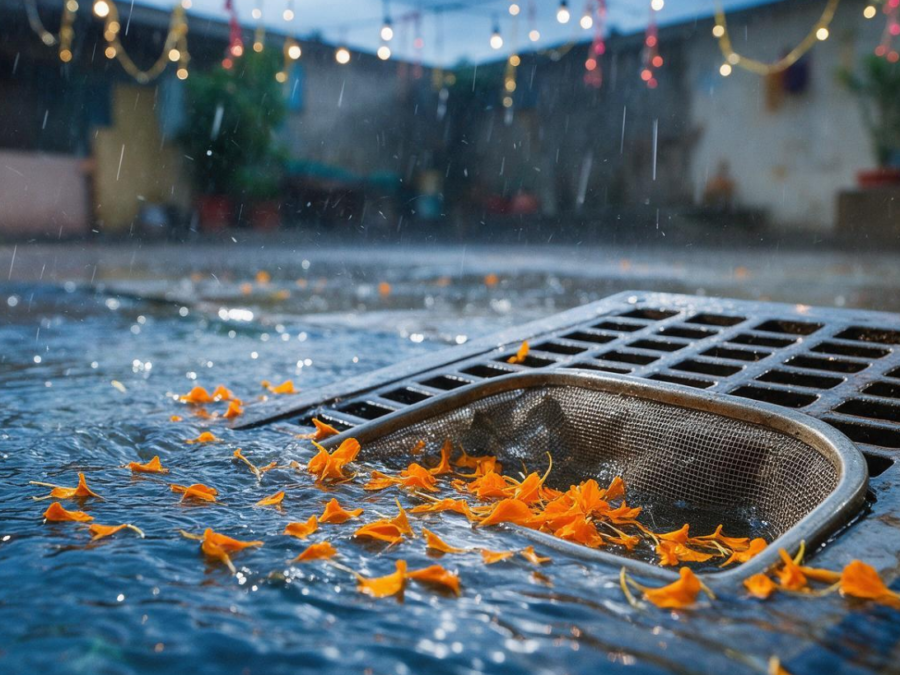
When diagnosis confirms a genuine table decline, the old borewell becomes your best asset rather than a loss. Direct borewell recharge — collecting rooftop rainwater, filtering it through a properly designed system, and returning it to the aquifer through the old casing or an adjacent recharge structure — targets exactly the problem: the table has fallen, so raise it.
In our field experience, revival cases typically respond within one to two good monsoons, and a revived bore holds yield deeper into each following summer. The full engineering — sizing, filter media, the protected casing connection, and the eight-step build sequence — is in our companion guide: Borewell Recharge Pit: Design, Methods, and Why Most Fail.
Two rules from that guide carry over because they decide whether revival works:
- Never inject unfiltered water. Silt permanently clogs aquifer fractures and can ruin the one asset you are trying to revive.
- Recharge the aquifer, not just the bore. A system designed for one season’s optics fails by monsoon two. The structure needs an annual service cycle like any other equipment.
When Recharge Alone Is Not Enough
Honesty cuts both ways. If the block is deeply over-exploited and your aquifer zone is thin, recharge may slow decline rather than reverse it. Then the conversation widens — and the ordering matters:
- Reduce demand first — meters, leak repair, fixture efficiency. Every litre saved is a litre the bore does not need to give. Our water audit guide is the starting point.
- Add storage — harvest the monsoon into tanks for the dry months instead of pumping it all from depth. The full trade-off is in RWH vs borewell: which keeps water flowing in 2026.
- New or deeper bore — last, and with permits. In notified over-exploited areas, CGWA and state authority rules apply, and a deeper bore in a falling block is a tap into a depleting pool, drilled at higher cost per foot. It buys time; it does not create water.
What Revival Costs (Indicative)
| Path | Indicative range (₹) | Note |
|---|---|---|
| Diagnostic visit (level + pump check) | 5,000–20,000 | Cheapest decision you will make |
| Pump repair / replacement | 15,000–60,000 | If misdiagnosed as “dry” |
| Recharge system (home scale) | 18,000–45,000 | Revives the asset; see the design guide |
| Casing rehabilitation / new bore | 1,50,000+ | Last resort; permits apply in notified areas |
We lead with reliability and diagnosis rather than cost because the cheapest number on this table is the one that prevents the most expensive mistake — drilling a new bore to solve a pump fault.
Prevention: Never Do This Again
- Log yield every summer — resting water level or pump-hours-to-empty. A two-line note per year shows the trend while there is still time to act.
- Service the recharge system pre-monsoon — the checklist is in our recharge pit guide.
- Fit dry-run protection and keep it maintained — it protects the pump and, indirectly, the aquifer.
- Treat the block’s problem as yours — in over-exploited blocks, the sites that recharge are the ones still pumping in April.
Why does my borewell dry up every summer?
Almost always seasonal water-table decline: extraction across the area outpaces recharge through the dry months, and the table drops below your bore’s aquifer zone until the monsoon refills it. It is a shared local condition — your neighbours’ bores will show the same pattern — and it is the clearest signal that a recharge system would pay for itself.
Can a dry borewell be recharged?
Usually, yes — if the aquifer zone it taps still exists and the casing is sound. Direct recharge routes filtered rainwater back to the aquifer through the old bore, raising the table over its slits again. Yield typically responds within one to two good monsoons. If the casing or screen is damaged, or the aquifer is locally exhausted, a site assessment determines the alternative.
How do I revive a dry borewell?
Diagnose first (pump and electrics, then static water level versus slit depth), then route filtered rooftop rainwater into the aquifer via a properly designed recharge system connected to the old casing. Never pour unfiltered water in — silt permanently clogs the aquifer. The full build sequence is in our borewell recharge pit design guide.
Water is not coming in my borewell — is it dry?
Not necessarily — and never assume so before checking the pump. Tripped dry-run protection, failed capacitors, worn impellers and jammed foot valves all present as “no water” while the aquifer is fine. Rule out equipment first; it is the most common misdiagnosis and the cheapest fix.
What is “dry run” in a borewell pump?
Dry-run is the pump operating without sufficient water around its intake. Modern controllers detect it and trip to protect the motor. Occasional dry-run trips late in summer are a yield warning sign; frequent trips mean the table is sitting at or below your intake — time to measure levels and plan recharge.
How long does borewell revival take?
With a correctly sized recharge system and normal monsoons, expect visible yield response within one to two seasons, and stronger summer holdout each year after. Revival is cumulative — the aquifer refills what years of over-extraction drew down.
How much does it cost to fix a dry borewell?
Depends entirely on the cause: a diagnostic visit (₹5,000–20,000) settles it. Pump repairs run ₹15,000–60,000; a home-scale recharge system ₹18,000–45,000; casing rehabilitation or a new bore ₹1.5 lakh-plus with permits. Diagnosis first — it is the cheapest line item and prevents the most expensive mistake.
Should I just drill a new, deeper borewell?
Only after diagnosis and recharge have been considered. A deeper bore in a falling block is a tap into a depleting pool — higher drilling cost per foot in hard rock, permission requirements in notified areas, and the same decline arriving at your door a few years later. Sites that recharge hold yields; sites that only chase depth repeat the cycle.
Conclusion: Diagnose, Then Revive
A dry borewell is a symptom, and symptoms have causes. Roughly a third of the time it is equipment wearing a groundwater costume. The rest of the time it is a water table that fell — which means it can be raised, and your old bore is the cheapest instrument for doing exactly that.
Start with the diagnosis. Then, if recharge is your answer, build it properly — and check how much rain your roof could be returning to the aquifer with our free runoff calculator, or talk to our team about a site assessment.
Statistics: CGWB Dynamic Groundwater Resource Assessment 2024 (PIB PRID 2089039); Government of Haryana Assembly reply, March 2025. Cost ranges and revival timelines are Ecolive field-experience figures — validate against a site-specific assessment.