Water Conservation Solutions in India: The 2026 Engineering Guide
India captures barely 8 percent of its annual rainfall. Every day, urban India generates 72,368 million litres of sewage. Only 28 percent is actually treated. The rest goes down the drain, untouched and wasted. Meanwhile, facility managers and RWA secretaries wake up worrying about dry borewells and tanker bills that routinely cross lakhs of rupees a month. The market for water conservation solutions in India is projected to reach USD 1758.8M by 2034. Yet, most buildings still treat water scarcity as an unavoidable crisis rather than a solvable engineering problem.
TL;DR: Effective water conservation solutions in India move beyond basic compliance. By applying the 4R framework (Reduce, Reuse, Recycle, Recharge), commercial buildings and RWAs can cut freshwater demand by up to 60 percent, eliminate tanker dependence, and achieve a verifiable water balance.
What are the most effective water conservation solutions in India?
The most effective water conservation solutions in India rely on a unified approach rather than isolated installations. By optimizing water usage through audits, reusing treated effluent, and capturing monsoon runoff, properties can drastically lower their freshwater intake. Single-point fixes usually fail within two years.
Most water companies simply install systems. EcoLive measures outcomes. Across 1,150 completed projects in 11 states, we have saved over 652 million litres of water. We achieve this by focusing on the complete water cycle of a building. You cannot manage what you do not measure. A proper solution starts with a baseline audit to understand exactly where every litre goes. From there, you can design a system that captures rainwater, treats greywater, and recharges the ground.
How does the 4R framework reduce tanker water dependence?
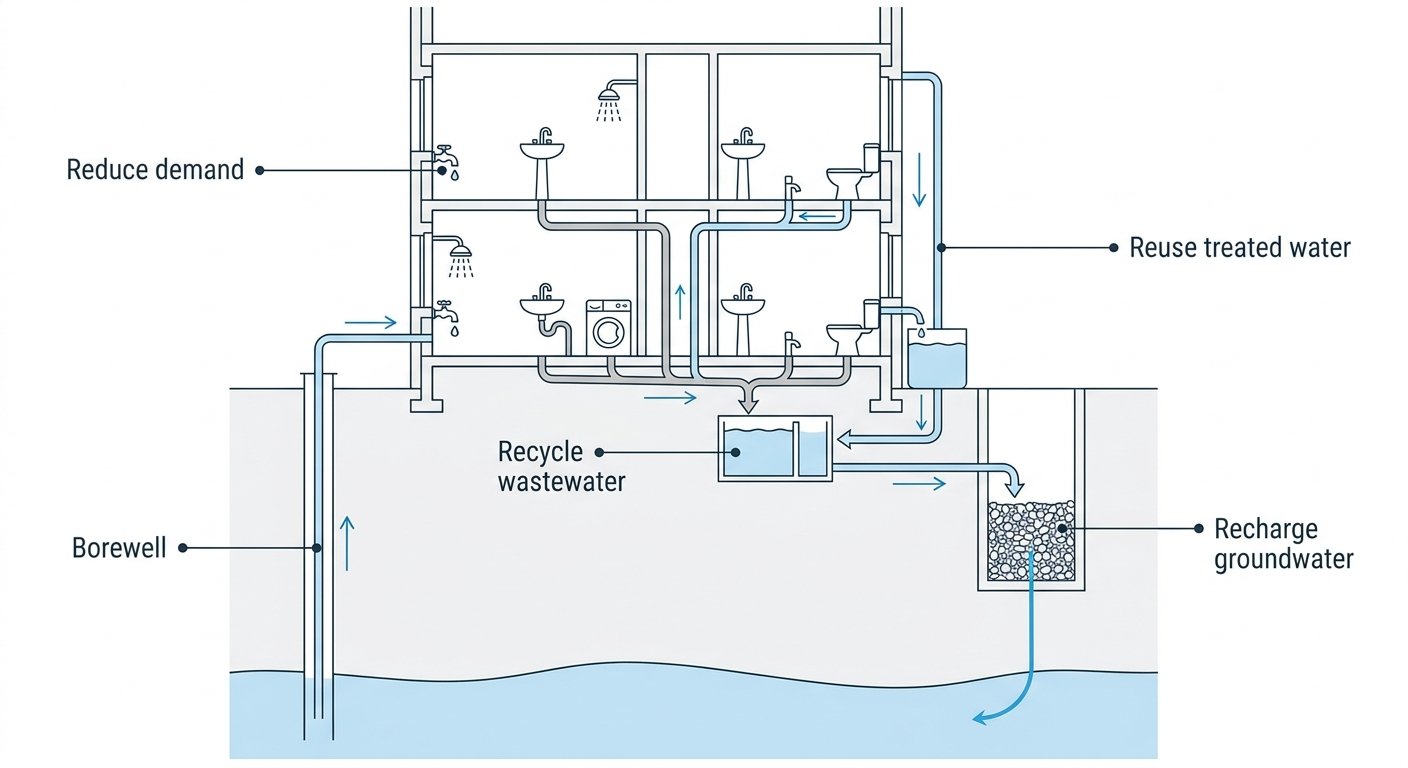
The 4R framework reduces tanker water dependence by closing the water balance loop at the point of consumption. This proprietary methodology focuses on four pillars: Reduce demand, Reuse treated water, Recycle wastewater, and Recharge groundwater.
When you apply the 4R framework, you stop buying water you already have. Reducing demand involves fixing leaks and installing efficient fixtures. Reusing water means taking RO reject or greywater and using it for flushing or cooling towers. Recycling treats sewage to a standard safe for landscaping. Recharging puts the monsoon back into your aquifer. Together, these steps systematically dismantle your reliance on external water tankers.
How do rainwater harvesting systems improve water conservation solutions in India?
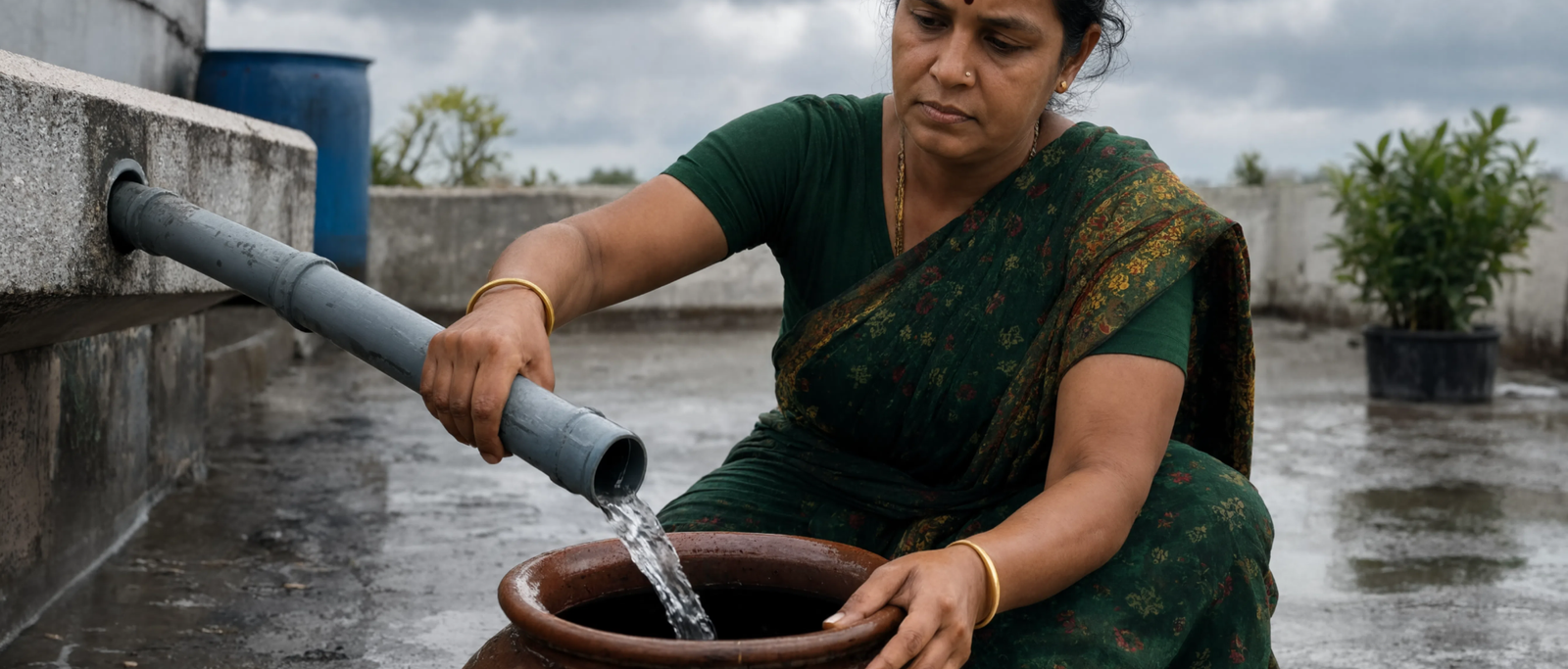
Rainwater harvesting systems improve water conservation solutions in India by capturing monsoon runoff before it becomes a drainage problem. We plan for weddings months in advance. Yet, India’s biggest festival is the monsoon, and seventy-five percent of our annual rainfall arrives in just four months. If your building is not prepared to catch it, you are literally watching your water budget wash away.
Proper rainwater harvesting is not a new concept. Indian communities have practiced rainwater harvesting for more than 4000 years by choice. They built stepwells and temple tanks because water security mattered. Today, we wait for a government notice. A well-designed rooftop harvesting system sizes the storage and filtration exactly to your catchment area. It ensures that the first flush of rain, which carries roof debris, is diverted away from your clean storage.
What is the true cost of ignoring groundwater recharge?
Ignoring groundwater recharge leads directly to dry borewells and escalating tanker bills. When buildings pave over natural recharge zones without installing proper injection wells, the aquifer depletes rapidly under heavy pumping.
Recharging groundwater is a highly effective way to sustainably manage the natural resource beneath your property. Instead of letting stormwater flood your basement, you can route it through desilting chambers and lateral filters into recharge pits. This raises the local water table. Over a single good monsoon, a scientifically designed recharge pit can push millions of litres back into the earth. This extends the life of your borewell and provides a buffer during the dry summer months.
How can wastewater reuse offset freshwater demand?
Wastewater reuse can offset your freshwater demand almost entirely by turning STP effluent into an operational asset. Most commercial buildings and factories have a Sewage Treatment Plant (STP) installed for compliance, but the treated water is often discharged into municipal drains. This is a massive missed opportunity.
Routing STP-treated water for non-potable uses is a highly practical engineering solution. Factories use it for cooling towers. RWAs use it for large-scale landscaping and dual-plumbing flush systems. By matching the water quality to the specific use case, you turn a waste liability into an operational asset. This significantly lowers your monthly utility costs and provides a steady water supply regardless of municipal cuts.
Which water conservation methods deliver the highest impact?
Different water conservation methods deliver different results, but starting with measurement yields the fastest return on investment. To help facility managers and RWA committees prioritize their capital expenditure, we track the performance of various solutions across our projects.
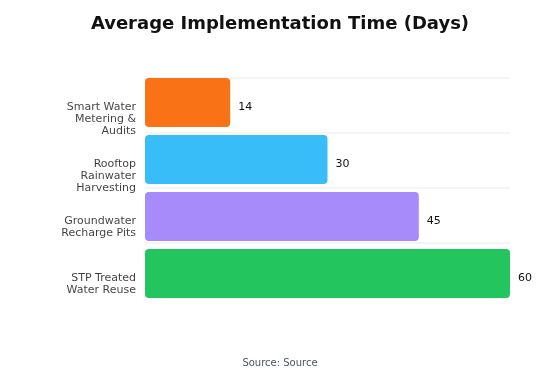
The data shows that starting with measurement yields the fastest return on investment. However, combining these methods through a unified water balancing approach delivers the highest total water recovery.
How do government initiatives impact local water conservation?
Government initiatives impact local water conservation by setting baseline compliance mandates and funding large-scale infrastructure. National programs aiming to provide piped potable water increase overall demand, making private conservation efforts absolutely critical for urban survival.
While 33 states and union territories mandate rainwater harvesting, compliance-driven adoption often produces weak systems that fail in a few years. Building owners install the cheapest possible pit to get their occupancy certificate. When you shift your mindset from regulatory compliance to actual water security, you build systems that last. You maintain them properly. You actually measure the water you save.
How do you start a site’s water balance assessment?
You start a site’s water balance assessment by establishing a clear baseline of how much water enters, is consumed, and exits your property. You cannot fix a water shortage by guessing.
We recommend starting with an engineering-led water audit. This identifies leaks, measures fixture efficiency, and evaluates your current STP performance. If you are dealing with surface runoff issues, running an urban flooding simulator can help map how rainfall behaves on your paved surfaces. Once you have the hard data, you can design a targeted intervention that actually solves the problem and pays for itself.
FAQ
How much do water conservation solutions in India cost? The cost varies significantly based on the scale of the property and the specific interventions required. A comprehensive water audit typically starts around ₹25,000, while full rainwater harvesting and STP reuse systems can range from ₹2 Lakh to ₹15 Lakh. The typical payback period for these engineering solutions is between 6 and 36 months.
How long does it take to implement a rainwater harvesting system? A standard rooftop rainwater harvesting system takes about 30 days to design and install. This includes site assessment, catchment mapping, and building the necessary filtration and storage units. Larger groundwater recharge pits may take up to 45 days to fully commission.
Can wastewater reuse completely eliminate tanker dependence? Yes, when properly integrated with the 4R framework, wastewater reuse can drastically cut or even eliminate tanker dependence. By routing treated STP effluent to cooling towers or dual-plumbing systems, facilities can recover up to 60 percent of their water. This creates a closed-loop system that is highly resilient to municipal shortages.
Need to cut your tanker dependence before the next summer? Request a Water Assessment today. Call +91 9871472211 or visit ecolive.in.