SEBI 2025 ESG Updates: How Green Credits Change BRSR Water Filing
On March 28, 2025, the Securities and Exchange Board of India (SEBI) issued a circular that alters how top listed companies handle their BRSR water filing. The update introduces voluntary green credits into the Business Responsibility and Sustainability Reporting (BRSR) framework. For ESG directors, water is no longer just a compliance checkbox. It is now a quantifiable asset.
TL;DR: SEBI’s 2025 update allows companies to report green credits earned through environmental actions alongside their BRSR Core filings. Water conservation projects, including rainwater harvesting and wastewater reuse, directly qualify. Companies must establish verifiable water baselines using the 4R framework to claim these credits successfully.
How does the SEBI 2025 update affect your BRSR water filing?
The March 2025 SEBI update affects your BRSR water filing by introducing voluntary green credits, allowing companies to offset resource consumption with verified water conservation efforts. SEBI’s official circular updated the BRSR format to include these voluntary disclosures earned under the government’s Green Credit Programme. The industry standards note clarifies that reporting these credits provides tangible proof of environmental impact. Companies can now offset their resource consumption metrics with verified credits, turning sustainability efforts into measurable board-level value.
Previously, companies only reported their total water withdrawal and consumption. If a factory used 10 million litres of water, the report simply stated that fact. Now, if that same factory recharges 5 million litres of rainwater into the ground, it can potentially claim green credits for the recharged volume. This shifts the focus from merely documenting usage to actively demonstrating water positivity.
What water projects qualify for green credits?
Water projects that qualify for green credits include measurable interventions like groundwater recharge, wastewater treatment, and consumption reduction. Because the BRSR Core subset consists of nine essential ESG KPIs requiring independent assurance, any water project claiming credits under the Green Credit Programme must have tamper-proof metering and verifiable data.
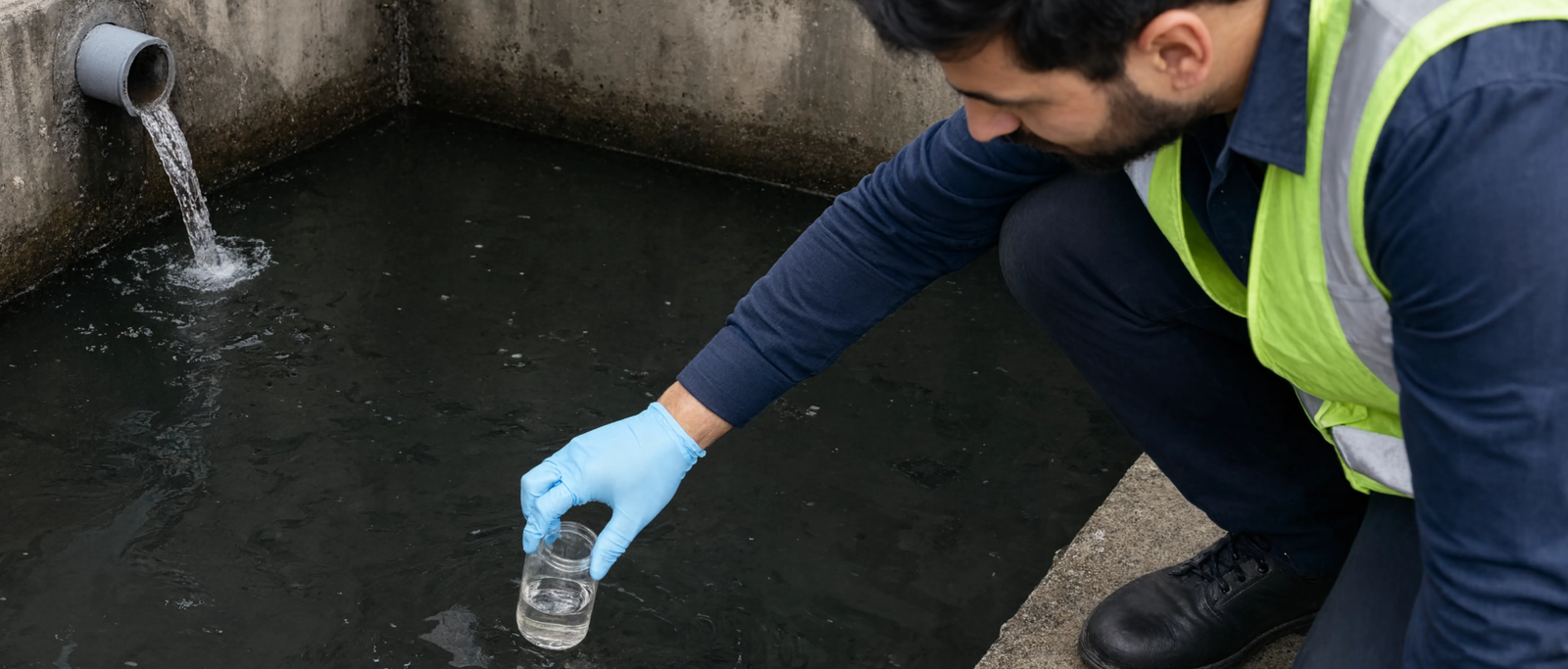
To earn these credits, a facility cannot rely on estimated water bills. The company must prove the exact volume of water saved or recharged. This requires installing smart water metering at key consumption points. Auditors will look for a closed water balance. They need to see exactly how much water enters the site, how much is consumed, and how much is recovered.
Which projects maximize BRSR water filing benefits?
Zero Liquid Discharge (ZLD) and scientifically designed rainwater recharge pits maximize your BRSR water filing benefits by satisfying both mandatory reporting and green credit criteria. Not all water initiatives yield the same regulatory value. When planning capital expenditure for the upcoming financial year, facility heads and ESG directors must prioritize projects that hit both targets.
The table above illustrates a clear hierarchy. Simply reducing consumption is expected, but actively putting water back into the ground through scientifically designed recharge pits generates the highest verifiable impact.
Why do companies fail the BRSR water assurance test?
Companies fail the BRSR water assurance test because they rely on estimated manual logbooks instead of verifiable digital flow meters to prove their water reuse and recharge claims. We saved 15 million litres of freshwater for a leading manufacturing client. Here’s how: By replacing outdated manual logbooks with automated IoT flow meters and redesigning their STP routing, we established a verifiable baseline that passed independent BRSR assurance with zero gaps.
An auditor cannot provide reasonable assurance on data that a facility manager estimates at the end of the month.
When the independent assurance provider arrives, they look for unbroken links in the data chain. If your factory claims to reuse 40% of its treated STP water, the auditor will ask to see the flow meter data for the routing pipe. If that meter does not exist, the claim cannot be verified. This is why BRSR compliance requires engineering solutions, not just desktop consulting. You have to fix the plumbing before you can file the report.
What must ESG Directors do before the FY26 deadline?
Before the FY26 deadline, ESG Directors must conduct a comprehensive water audit and install digital flow meters to close the gap between sustainability claims and measured reality. Start by auditing across all your top manufacturing sites.
Implement the 4R framework (Reduce, Reuse, Recycle, Recharge) as a unified system. Do not treat rainwater harvesting as an isolated compliance project. Integrate it with your wastewater recycling efforts to create a complete site water balance.
Once the physical infrastructure is optimized, install digital flow meters to capture real-time data. This ensures your BRSR FY26 water metrics will survive third-party scrutiny and position your company to claim the new green credits.
Ready to build a board-ready water baseline?
EcoLive helps listed companies measure, reduce, and report their water metrics with engineering precision. Contact us at +91 9871472211 or visit ecolive.in to Request a Water Assessment.