BLOG TYPE: news-analysis (The topic is about a government regulation/scheme and its impact, which fits this format perfectly.)
META: With a ₹2.97 lakh crore outlay, India’s AMRUT 2.0 mission is set to overhaul urban water. Discover what this means for your city, RWA, and business.
How Will the AMRUT 2.0 Scheme Reshape Water Management in Indian Cities?
India’s urban centres are expanding at a record pace, but the infrastructure for a fundamental resource—water—is under immense pressure. The Indian government’s Atal Mission for Rejuvenation and Urban Transformation (AMRUT) is a direct response to this challenge. The second phase, AMRUT 2.0, launched in October 2021, aims to make Indian cities ‘water secure’ with a massive financial outlay and ambitious goals.
TL;DR: The AMRUT 2.0 scheme aims to provide universal water tap connections to all 4,378 statutory towns in India, promote a circular water economy through wastewater recycling and reuse, and rejuvenate urban water bodies. For RWAs and businesses, this signals a major policy shift towards measured, accountable, and sustainable water management.
What Is the AMRUT 2.0 Scheme?
AMRUT 2.0 is the next step in India’s urban transformation journey, building on the first phase of the mission. Its primary objective, as stated by the Ministry of Housing and Urban Affairs, is to provide universal coverage of water supply through functional taps to all households in all statutory towns in the country. With a total investment of ₹2.97 lakh crore over five years (from FY 2021-22 to FY 2025-26), it represents a significant national commitment to solving urban water issues.
Why Does This Mission Matter for Urban India?
The scheme moves beyond just providing infrastructure; it aims to change how cities manage their entire water cycle. A key component is the introduction of the ‘Pey Jal Survekshan,’ a survey that ranks cities based on water quality, quantity, and coverage. This creates public accountability and encourages competition among urban local bodies to improve their water services. For the first time, there is a national framework that links funding to measurable outcomes in water conservation, wastewater management, and rejuvenation of water bodies, directly impacting over 10.5 crore urban households.
What Are the Core Goals of AMRUT 2.0 for Water Management?
The mission’s goals are comprehensive, aiming to create a circular water economy.
1. Universal Water Supply
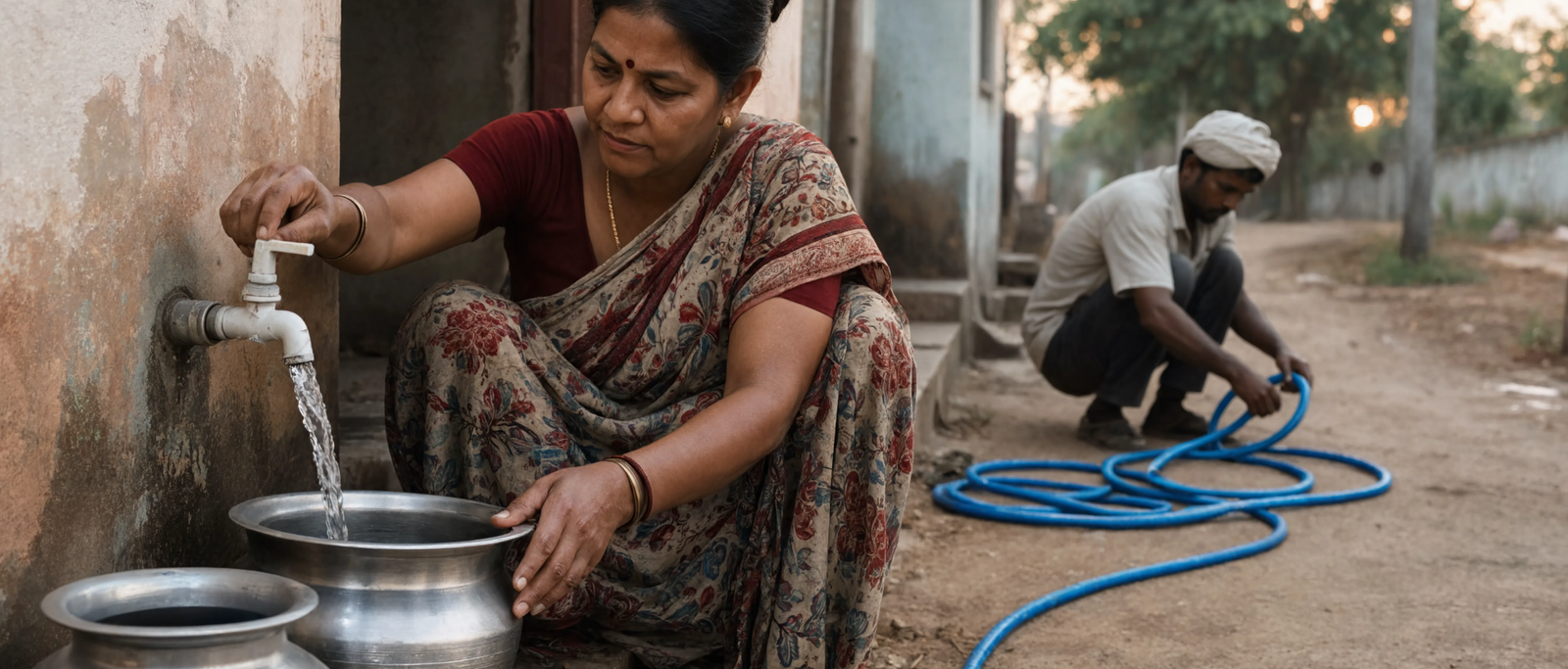
The headline goal is to close the gap in piped water access, ensuring every urban household has a reliable tap connection. This addresses a major equity issue and aims to reduce dependency on unreliable sources like water tankers.
2. Sewerage and Septage Management
AMRUT 2.0 will provide 100% coverage of sewerage and septage management in 500 AMRUT cities. This is crucial for preventing the pollution of groundwater and surface water bodies, a foundational step for creating a healthier urban environment.
3. Water Conservation and Rejuvenation
A significant focus is on making cities self-sufficient. This includes promoting data-driven water management, conducting regular water audits at the city level, and encouraging the adoption of technologies like rainwater harvesting. The mission actively supports projects that rejuvenate dying water bodies, turning them back into community assets.
4. Promoting a Circular Water Economy
This is perhaps the most forward-looking aspect. AMRUT 2.0 strongly encourages projects that treat and reuse wastewater for non-potable purposes, such as in industries and for horticulture. This reduces the demand for fresh water and is a critical step for businesses looking to improve their ESG and BRSR water compliance.
How Can RWAs and Businesses Align with AMRUT’s Vision?
The national push from AMRUT 2.0 creates a powerful incentive for local communities and businesses to act.
- Conduct a Water Audit: The first step is to understand your own water balance. A professional water audit can identify leaks, measure consumption, and provide a clear roadmap for reduction and reuse, aligning perfectly with AMRUT’s data-driven approach.
- Invest in Rainwater Harvesting: With the mission’s focus on conservation, implementing a modern rainwater harvesting system is no longer just a good idea—it’s a strategic necessity. Capturing monsoon runoff reduces reliance on municipal supply and recharges local groundwater.
- Implement Wastewater Reuse: For factories and large facilities, treating and reusing wastewater is now a key performance indicator. This not only cuts costs but also demonstrates a commitment to the circular economy principles championed by the scheme.
- Adopt the 4R Framework: A unified approach of Reduce, Reuse, Recycle, and Recharge provides a complete solution. This framework, which is central to our work at EcoLive, helps you create a closed-loop water balance for your property or facility.
By taking these steps, you not only contribute to your city’s ‘water secure’ goals but also build resilience, reduce operational costs, and enhance your brand’s reputation.
For a detailed assessment of your property’s water-saving potential, contact the EcoLive team at +91 9871472211 or visit us at ecolive.in.
— FAQ SCHEMA —
{
  "@context": "https://schema.org",
  "@type": "FAQPage",
  "mainEntity": [
    {
      "@type": "Question",
      "name": "What is the main goal of the AMRUT 2.0 scheme?",
      "acceptedAnswer": {
        "@type": "Answer",
        "text": "The primary goal of AMRUT 2.0 is to provide universal water supply through functional taps to all households in all 4,378 statutory towns of India. It also aims to provide 100% sewerage coverage in 500 AMRUT cities."
      }
    },
    {
      "@type": "Question",
      "name": "How is AMRUT 2.0 different from the first AMRUT mission?",
      "acceptedAnswer": {
        "@type": "Answer",
        "text": "AMRUT 2.0 expands its coverage from 500 cities to all statutory towns in India. It also introduces new focus areas like the 'Pey Jal Survekshan' for city ranking, rejuvenation of water bodies, and promoting a circular water economy through wastewater reuse."
      }
    },
    {
      "@type": "Question",
      "name": "What is the 'circular water economy' promoted by AMRUT 2.0?",
      "acceptedAnswer": {
        "@type": "Answer",
        "text": "A circular water economy aims to reduce waste and make the most of water resources. Under AMRUT 2.0, this involves treating wastewater and reusing it for non-potable purposes like industrial processes, flushing, and horticulture, thereby reducing the demand on fresh water sources."
      }
    }
  ]
}