How Much Can You Save with Greywater Recycling? A Guide for Indian Commercial Buildings
Is your facility management team constantly booking water tankers? For many commercial buildings in cities like Gurugram, Delhi, and Jaipur, the high and rising cost of tanker water is a major operational expense. A single 10,000-litre tanker can cost anywhere from ₹1,500 to ₹3,000, and a large office complex can consume several of these each day. But what if up to 70% of that water could be found for free, right within your own building?
TL;DR: Commercial greywater recycling captures the gently used water from your building’s sinks, showers, and laundry. After treatment, this water can be reused for non-potable needs like toilet flushing, cooling tower makeup, and irrigation. This can reduce your dependence on costly water tankers by over 60%, with most systems offering a full return on investment in just 2 to 3 years.
What is Greywater and Why Should You Care?
Greywater is all the wastewater generated in a building from streams that do not contain fecal matter. Think of the water from office pantry sinks, handwashing stations, and showers in a gym facility. A typical commercial building can find that 50% to 80% of its total water consumption is greywater. Instead of sending this valuable resource down the drain, you can treat and reuse it, which is the “Recycle” and “Reuse” part of EcoLive’s 4R framework. Caring about greywater means caring about your operational budget and your environmental footprint.
The Real Cost of Water Tankers for Your Building
Dependency on water tankers isn’t just a line item on an invoice; it’s a symptom of an inefficient water system. The costs go beyond the direct price and include administrative time for booking, inconsistent water quality, and the uncertainty of supply, especially during peak summer months.
Let’s look at a simple scenario for a mid-sized office building in Gurugram:
| Daily Water Demand | Tankers per Day (10,000L) | Avg. Cost per Tanker | Monthly Cost | Annual Cost |
|---|---|---|---|---|
| 40,000 Litres | 4 | ₹2,000 | ₹2,40,000 | ₹28,80,000 |
This is a significant operational expense that directly impacts your profitability.
How Does a Commercial Greywater Recycling System Work?
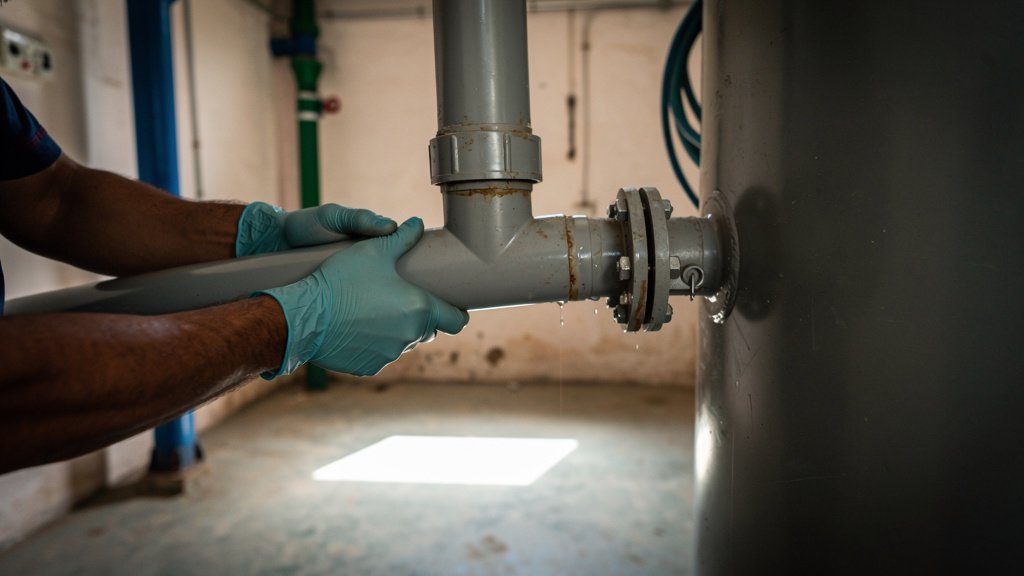
Implementing a greywater system is a straightforward engineering project. It doesn’t require major structural changes and integrates with your existing plumbing.
- Collection: Separate pipes collect greywater from sources like sinks and showers, diverting it from the main sewer line.
- Filtration & Treatment: The collected water passes through a multi-stage treatment process. This typically includes screening for large particles, biological treatment to remove organic matter, and disinfection (often with UV or chlorine) to kill pathogens.
- Storage: The treated, non-potable water is stored in a dedicated tank.
- Pumping & Reuse: A separate pumping system distributes the treated water to where it’s needed, primarily for toilet flushing, which can account for 30-40% of a commercial building’s total water use.
A thorough water audit is the first step to designing a system that is sized correctly for your building’s specific needs.
What’s the ROI on a Greywater System in India?
The investment in a greywater recycling system depends on the size of your building and the volume of water to be treated. However, the payback period is often surprisingly short.
Let’s revisit our example building with an annual tanker cost of ₹28,80,000. A greywater system can typically replace 60-70% of this demand.
- Potential Annual Savings: 60% of ₹28,80,000 = ₹17,28,000
- Estimated System Cost: A system for a building of this size might range from ₹25 Lakh to ₹40 Lakh.
- Payback Period: ₹35,00,000 (avg. cost) / ₹17,28,000 (savings) = ~2 years
After the payback period, the savings directly contribute to your bottom line. Furthermore, it improves your building’s asset value and helps with BRSR and ESG compliance.
Is Your Building a Good Candidate for Greywater Recycling?
Your building is an excellent candidate if you answer “yes” to these questions. Does your facility have high non-potable water demand from sources like toilet flushing, cooling towers, or extensive landscaping? Are your monthly water tanker bills consistently high? Is your management looking for measurable ways to improve sustainability and achieve ESG goals? If so, exploring greywater recycling is a logical next step.
Ready to stop wasting money on water tankers and build a more water-secure facility? The first step is understanding your unique water balance.
Request a complete Water Assessment for your commercial property today. Call us at +91 9871472211 or contact us to schedule a visit.